Showing posts with label wisdom. Show all posts

Friday, December 26, 2014

E. Peevie's Not-To-Be Missed Book Recommendations from 2014.

Some of the books I read in 2014 were AMAZING. In case you're looking for ideas for what to read in 2015, here are the highlights, annotated:

One More Thing: Stories and Other Stories 
by B.J. Novak

You know B.J. Novak as that guy from The Office who always looks a little fatigued, but who also looks like he could be Hugh Grant's younger brother. But if you read this book of short and very short stories, you will think of him as That Guy Who Can Really Write and Who Also Happens to Be On A TV Show. Because these stories! They amaze.

Novak's stories start somewhere familiar and end up knocking you off your chair with their originality. They deliver unexpected humor and on-point parody; they are clever and poignant and smart. Here's a great interview with Novak about the book and other stuff, in case you're interested.

Gone Girl
by Gillian Flynn

This suspenseful novel has more twists than a bag of fusilli. If you're like me, you'll need to take a swig of Mylanta every few chapters; or maybe take a break from reading to have a pot of Darjeeling and remind yourself that--thank God--mostly you can avoid dealing with sociopaths except in fiction and the occasional outlying relative. (Unless you can't, of course, in which case: sympathies.)

Gone Girl combines Stephen King-esque suspense with an insidious unreliable narrator a la Zoe Heller's Notes on a Scandal. I couldn't put it down.


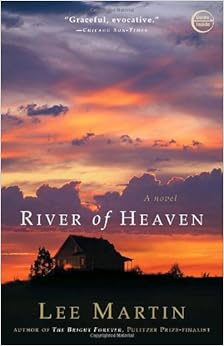
by Lee Martin

Sam Brady leads a quiet, private life with his dog, Stump, until he decides to build a doghouse that looks like a ship. The doghouse attracts attention, which like the first domino, sets off a chain reaction. Sam's past begins to catch up to him. Martin presents Sam and his neighbor Arthur, his brother Cal, and other characters with vivid complexity. His storytelling reminds us that the small things matter. 

Lee Martin's quiet, observant, lyrical and surprising storytelling in this little novel has made him one of my new favorite authors. I will definitely be seeking out Martin's other titles in 2015.

The Remains of the Day
by Kazuo Ishiguro

This book has no right to be as fascinating, funny, beautiful, and compelling as it was. Nothing much happens--and yet by the time you get to the end, you feel like you've had a Literary Experience and you will never be the same.

I'm happy that Mr. Ishiguro has a new novel coming out in March, his first in ten years.

Extremely Loud and Incredibly Close
by Jonathan Safran Foer

Foer's groundbreaking literary style would normally not be my cup of tea. It's borderline stream-of-consciousness, and my undiagnosed ADD gives me enough trouble tracking the characters and settings in a traditional novel, let alone one that has multiple POVs. And yet this story sucked me in and pulled me along. Foer captures the voice of his young male protagonist perfectly; it's poignant and funny.

Man's Search for Meaning
by Viktor Frankl

"Everything can be taken from a man but one thing: the last of the human freedoms--to choose one's attitude in any given set of circumstances, to choose one's own way."

In telling the story of his time in the concentration camps during WWII, Viktor Frankl asserts that we have the power to find meaning, hope, and purpose in the middle of our inevitable suffering. This book is an enduring and accessible classic.
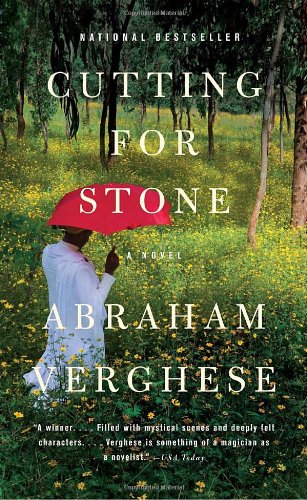
Cutting for Stone 
By Abraham Verghese

It says a lot about this book that John Irving (another of my favorite authors) reviewed Cutting on Amazon: "This is a first-person narration where the first-person voice appears to disappear, but never entirely; only in the beginning are we aware that the voice addressing us is speaking from the womb!" 

I'll be reading this one again.

The Hot Kid
By Elmore Leonard

I picked this up because I binge-watched all the seasons of Justified (based on an Elmore Leonard novella, Fire in the Hole) this year, and wow. Elmore Leonard's tight, packed sentences sucked me in from the first page, and I don't even know how he manages to write such vivid characters with so few words. I will definitely read more Elmore Leonard in 2015.

The Seven Storey Mountain
by Thomas Merton

Started this one a couple of years ago; put it down for a long time; and finally picked it up and read it all the way through this year. There is nothing like a good conversion story to inspire your new year.

As the child of fundamentalist, Dispensationalist parents, I learned early on to mistrust any form of Christianity that was not exactly like my own. Catholics, to me, were not "real" Christians; in fact, most Christians were quotation-mark "Christians." I'm not proud of this. But as Kathleen Norris wrote in Amazing Grace (see below), “In order to have an adult faith, most of us have to outgrow and unlearn much of what we were taught about religion.” 

And Merton delivers a great pay-off, with great writing on philosophy and theology. He inspires me to love God more, and to examine my faith and practice more rigorously. 

Amazing Grace
by Kathleen Norris

This was a re-read from several years ago. I picked it up again as part of my preparation for a class I taught at church. It's definitely worth re-reading. In her writing, Kathleen Norris often calls upon the writings of the early church mothers and fathers to illuminate contemporary life and faith. No one else does this like she does; she's like the modern day Thomas Merton.

Harry Potter and the Sorcerer's Stone
Harry Potter and the Goblet of Fire
Harry Potter and the Prisoner of Azkaban
Harry Potter and the Goblet of Fire
by J.K. Rowling

I read the first four Harry Potters when I was on bedrest in the hospital, pregnant with M. Peevie. M. Peevie, you might recall, just turned fourteen, and when I told her I had not read the last three books, she was shocked and horrified. 

"Mom! You have to read them!" she ordered.

I told her I didn't really remember the first four, but she suggested I just re-read them. "It won't take you very long!" she predicted. She was right. They were great the second time around; and now I've started the fifth book, H. P. and the Order of the Phoenix.


To Be Near Unto God
by Abraham Kuyper

"...[w]hen clouds gather over your head, when adversity, loss and grief inflict wound upon wound in your heart, when the fig tree does not blossom, and the vine will yield not fruit, then with Habakkuk rejoice in God, because his blessed nearness is enjoyed more in sorrow than in gladness...". I am working on this. 


A Public Faith: How Followers of Christ Should Serve the Common Good, by Miroslav Volf: File this one under "Mostly Over My Head"--but still well worth the time and effort to consume it. 

Volf responded to Bonhoeffer's assertion that the church facing the Nazi regime was experiencing a passage through a foreign land, suggesting that outside of this context, "serious problems arise" from this perspective:

The fundamental theological problem with such an external view of Christian presence in the world is a mistaken understanding of the earthly habitats of Christian communities. It presupposes that the culture in which they live is a foreign country, pure and simple, a land bereft of God, rather than a world that God created and pronounced good.
...[I]t would contradict major Christian convictions to think that the world outside Christian communities is bereft of God's active presence. The God who gives "new birth" is ... also the creator and sustainer of the world with all its cultural diversity...Cultures are not foreign countries for the followers of Christ, but rather their own homelands...Christian communities should not seek to leave their home cultures and establish settlements outside or live as islands within them. Instead, they should remain in them and change them--subvert the power of the foreign force and seek to bring the culture into closer alignment with God and God's purposes.

This is all well and good, but I'm not sure what that looks like operationalized. And that is a whole other blog post.

Pastrix: The Cranky, Beautiful Faith of a Sinner and Saintby Nadia Bolz-Weber: See Merton, above.

This is our God. Not a distant judge, nor a sadist, but a God who weeps. A God who suffers, not only for us, but with us. Nowhere is the presence of God amidst suffering more salient than on the cross. Therefore, what can I do but confess that this is not a God who causes suffering. This is a God who bears suffering. I need to believe that God does not initiate suffering. God transforms it.

Driftless, by David Rhodes: Many beautiful sentences in this one.

Jacob lay on his back. The stars looked back at him from ten million years ago, their light just now arriving. He wondered if there were other places in the universe where the rules of the living did not require feeding on each other--where wonder could be discovered without horror and learning the truth did not entail losing one's faith.

The Complete Storiesby Flannery O'Connor: You could teach a class based solely on the metaphors and similes O'Connor uses to talk about the sun and sky:

The sun was a huge red ball like an elevated Host, drenched in blood and when it sank out of sight it left a line in the sky like a red clay road hanging over the trees.
The sun was like a furious white blister in the sky.
The cows were grazing on two pale green pastures across the road and behind them, fencing them in was a black wall of trees with a sharp sawtooth edge that held off the indifferent sky.
The sky was bone-white and the slick highway stretched before them like a piece of the earth's exposed nerve.

OK, this post is already too long, so here are some honorary mentions from my 2014 reading list, with tiny reviews and/or quotations.

Faith Unraveled: How a Girl Who Knew All the Answers Learned to Ask Questions
by Rachel Held Evans: Exactly.

Heart of Darknessby Joseph Conrad: "I don't like work--no man does--but I like what is in the work,--the chance to find yourself."

Jewel, by Brett Lott: Sprawling. Well-drawn characters.

A Clash of Kings: A Song of Ice and Fireby George R. R. Martin: Loving this series.

Lolitaby Vladimir Nabokov: Beautiful writing; disturbing story.

Divergent, by Veronica Roth: The four categories were such a smart story hook, but honestly, it reads a little like a YA harlequin romance, especially once the kissing starts. This SNL spoof The Group Hopper was hilarious.

I Always Knew I Would Make It (And Other Entrepreneurial Fallacies)by Kate Koziol. This author is smart, funny, brave, and resourceful. And good at puzzling.

The Writing Lifeby Annie Dillard: Finally making my way through the best books on writing. This is a classic.

Whose Bodyby Dorothy Sayers: Can't believe it took me this long to read Sayers.

When You are Engulfed in Flamesby David Sedaris: Funny. Duh.

Bleak House, by Charles Dickens: Bleak, long. Very Dickensian, if you know what I mean.


That's it. What are you recommending from your 2014 reads?

Sunday, August 17, 2014

Flies, Fairy Tales, and Shakespeare


Somebody left the screen door open, and now our house is overrun with flies. I keep killing them with fat insurance envelopes and a TCF Bank flyer printed on sturdy coated stock. I wish I had a fly swatter, but thank gooodness we still live in a world where there's junk mail.


C. Peevie has killed a few flies also, and likes to brag about it. 
Brooke's Brave Little Tailor
He walked out of the bathroom and said, "I just killed another fly."

"Me too," I said. "I added three more notches to my belt this morning."

"You put the notches on your belt?" he asked. "I put them on my knife." I pictured him throwing a Bowie knife and pinning flies to the wall, their tiny legs flailing. 

He is apparently unfamiliar with the Grimm fairy tale, The Brave Little Tailor--so I sent him the link.

"Read it," I told him. "Clearly, your education has been sadly neglected."

"OK," he said. 

We both know he won't. You might want to re-read this clever story, however. It's more entertaining than I remembered.


The flies, however, who understood no German, would not be turned away. 
When he drew it away, and counted, there lay before him no fewer than seven, dead and with their legs stretched out.
His heart wagged with joy like a lamb's tail.


I could go on--but I'll just let you read it for yourself.

There are good reasons to read fairy tales even beyond the fact that they're entertaining.  Albert Einstein is questionably credited with saying, "If you want your children to be intelligent, read them fairy tales. If you want them to be very intelligent, read them more fairy tales."

Whether he actually said those words or not, the essence of the quote -- that developing the imagination is key to an educated mind -- correlates with his belief that "imagination is more important than knowledge." Others have extolled the value of the imagination for learning, success, and life as well. 


Those who dream by day are cognizant of many things that escape those who dream only at night. --Edgar Allan Poe
Imagination rules the world! --Napoleon Bonaparte

You can find dozens of pages of quotes on BrainyQuotes, ThinkExist, and similar sites--but the chain of proper attribution on these sites unreliably begins and ends at "I read it on the Internet!"

I don't know how I got from a fly infestation to Shakespeare, but I leave you with these words from Theseus in A Midsummer Night's Dream:


Lovers and madmen have such seething brains, 
Such shaping fantasies, that apprehend
More than cool reason ever comprehends.
The lunatic, the lover and the poet
Are of imagination all compact:
One sees more devils than vast hell can hold,
That is, the madman: the lover, all as frantic,
Sees Helen's beauty in a brow of Egypt;
The poet's eye, in fine frenzy rolling,
Doth glance from heavne to earth, from earth to heaven;
And as imagination bodies forth
The forms of things unknown, the poet's pen
Turns them to shapes and gives to airy nothing
A local habitation and a name. 

Tuesday, September 3, 2013

How To Say What You Mean

I recently saw this quote on Pinterest:

"Sometimes when I say, 'I'm OK,' I want someone to look me in the eyes, hug me tight and say, 'I know you're not.'"

I do not understand this, and even though I know I should not be judgy, I sort of am. I realize that I am a horrible person. I realize that many people in my life, including people that I love, and including people in my family, can probably totally identify with this.

The Pinterest quote reminded me of an episode on a recent vacation: I had prepared and served a festive meal for the family, and a few minutes after we finished eating, and well before our digestive systems had fully engaged, my SIL started clearing the dinner dishes.  "Sit down," I suggested, "Relax.  I'll get to those later."

She kept cleaning up, and said, "You don't really mean that." She asserted that everyone appreciated help with the dishes after whipping up dinner for a bunch of people.  "I always do this for my girlfriends," she said, "Even when they say, 'Oh, don't bother!'--because I know they don't really mean it."

"Well, I really mean it," I said.  "I wouldn't say it if I didn't mean it.  It's really nice of you to do the cleaning up, but I honestly wouldn't mind cleaning up a little later. I'd be happy to have you sitting down and relaxing."

Apparently, this is what people do: they say things they don't mean. Folks seem to believe that people don't say what they really feel, and that their true meaning and intention must be discerned from something other than their words. And on the flip side, they communicate in the same way, skirting around a direct statement and expecting their listeners to read between the lines or interpret their body language.

Sometimes I feel like I am from a different planet, or that I have some kind of narrow form of autism that makes me unable to read social cues, because this just does not make sense to me. This confusing mentality leads to Harlequin-romance-type misunderstandings and conflict. 

I believe that we should take people at their word, and act accordingly. Say what you mean. Don't say what you don't mean. Ask for what you want or need--but at the same time, have very limited expectations of what people can and will do for you. This is the Peevie Rule for Clear and Sensible Communication.

My immediate response to that Pinterest quote is, instead of saying that you're OK, why wouldn't you say, "I'm not OK. Could I have a hug?" This seems more--incoming judgyness!--mature--and more likely to elicit the outcome you hope for.

It is a fundamental sign of emotional health to take responsibility for one's own happiness. I tell my kids, "You are responsible for your own happiness. Not me, not your siblings, not your teachers, not your friends. If you are not happy, do something about it."


"Most folks are just about as happy as they make up their minds to be." --Abraham Lincoln

What good does it do to say you're OK when you're really not? I mean, unless you're in a social situation, like your workplace, where it's not necessarily appropriate to ask for hugs and to lay your true feelings right out there. But I'm guessing that those are not the people you want looking deep into your soul and sussing out your need for a moment of physical reassurance.

When you're around people from whom a hug is appropriate and would feel good--why would you not just say, "I'm so sad. I could use a hug"?

It is one goal of this blog to encourage people to say what they need, and to express in direct, non-metaphorical language, how they feel and what would help them feel better. Let's practice together:

"I'm feeling lonely. I'd like someone to hang out with tonight. Are you available?"

"I feel sad. I really miss [person's name that you miss]. I'd like to talk about him/her."

"Would you be willing to help out with the dishes tonight?"

"I'm sorry to cut you off, but I need to get off the phone now."

"I know you want to keep reading my delightful blog, but I really want to end this post and go watch some TV."

Let me know how it goes. Alternatively, let me know if you think my expectations are completely unrealistic and that I don't have any understanding for how real people communicate in western culture. I can handle it.

Thursday, April 5, 2012

M. Peevie: Reflections on Social and Economic Policy

The conversation started with a discussion of Mitt Romney and his piles and piles of money. 
"Mitt Romney claims he's not even part of the one percent," C. Peevie said.

"What?! No way," I said. "Cite your source." That's a favorite riposte in our household.

"Rolling Stone," he said. 

I raised one eyebrow and looked over to Mr. Peevie for a ruling. "I'd need to see the article for myself," he said.

"What's the one percent?" M. Peevie asked.

"It's the people who have buckets of money, M. Peevie," C. Peevie explained. "The rest of us are the 99 percent." 

"M. Peevie," I added, "There are many people who don't have enough money to even buy what they need. Some people have to choose between paying their rent and buying food, or between paying the bill to heat their house and buying the medicine they need."

"But why do some people have so much money, and other people don't?" asked the budding socialist.

"Some people are really good at making money," I said. "But how do they do it?" she asked. She was like a machine gun, spitting out questions without taking the time to reload.

"Well, maybe they start a business..."

"But how do they start a business if they don't have any money?" she interrupted.

"The bank will lend them money if they don't have enough to start their business, and if they have a good business plan," we told her, all of chiming in with totally theoretically observations about the process of starting a business. And then we got back to the solutions for helping the poor.

"Some people believe that the best way to help people who are poor is to ask businesses and people with more money to pay a little more in taxes so we can use that money to set up programs to help them, and to create jobs," I told her. "And other people think that the best way to help poor people is to help the people who run businesses, because businesses make jobs. The more jobs there are, the fewer poor people." Or so they say, I didn't add.

"That's called 'trickle down,' C. Peevie interjected. "And it doesn't work."

"I think they both sound like good ideas," said the 11-year-old sage. "Why can't we do both?"

I looked at Mr. Peevie and he looked at me. "She'd make a good president," I said.

"I do not want to be president," she said. "Too much responsibility, and too much sitting behind a big desk and signing papers all day long."

These kinds of conversations make me anticipate with wonder how this girl will one day change the world.

Wednesday, May 5, 2010

An Anti-Drivel Mothers' Day Post

I can't repost my recent rant about why you should stop saying "Happy Mothers' Day" without appearing to be a lazy blogger who has run out of ideas, so instead, I'll add these helpful quotes about mothers and their body parts:

Most mothers are instinctive philosophers.  --Harriet Beecher Stowe

Women who miscalculate are called mothers.  --Abigail Van Buren

It is quite surprising how many children survive in spite of their mothers. --Norman Douglas

My mother never saw the irony in calling me a son-of-a-bitch.  --Jack Nicholson

My mother had a great deal of trouble with me, but I think she enjoyed it.  --Mark Twain

It would seem that something which means poverty, disorder and violence every day should be avoided entirely, but the desire to beget children is a natural urge. --Phyllis Diller

Yes, mother.  I can see you are flawed.  You have not hidden it.  That is your greatest gift to me. --Alice Walker


I scrolled through about seven zillion quotes about mothers to come up with this list of quotes which have some relationship to my own reality, and which counteract the whole "mothers are perfect angels" drivel that fills the Internets this time of year.  Most of the quotes were gushy and overstated, like a Helen Steiner Rice poem multiplied by six Jewish proverbs.  I think we should appreciate and honor our mothers in ways that acknowledge their imperfect humanity as well as the parts of motherhood that they got right.  If Jeannette Walls can do this, so can I.

My mother was and is far from perfect.  But now that I'm a far-from-perfect mother myself, I have a lot more appreciation for her, and I see her sacrifices more clearly.  In my mind I can see her sitting on the sidelines of my field hockey games, wearing cotton pedal-pushers and white Keds, her blue hair glinting in the sun.  I know now that she probably had other things she'd rather be doing on a weekday afternoon other than getting her butt damp and grass-stained while I cleated around a muddy field in a kilt chasing a white ball with a stick. 

But she showed up, and when my friends said, "Hey, look at that lady over there with blue hair!", I was happy to say, "Yeah.  That's my mom.  She comes to all my games."

Sunday, April 11, 2010

Joy of Parenthood

One of my fondest joys as a parent is talking about about sex with my children. I really do love these conversations, because I just never know what will come up.

Last week, A. Peevie and I hopped out of the car and walked across the parking lot to the drug store. Along the way, we passed a discarded condom wrapper lying on the asphalt.

"What's that, Mom?" A. Peevie asked.

"It's a condom wrapper, A.," I said. "Do you know what condoms are?"

"No," A. Peevie said. Pause. "And I don't want to know." His instincts guided him to take evasive action to avoid a conversation that he somehow intuited would be awkward.

"Well, buddy," I said, "I'm going to tell you what they are when we come back out to the car. And it's going to be only the first of several conversations that we will be having about sex in the near future." I could feel him sending vibes of displeasure into my airspace, but he didn't say anything else.

"So, A.," I said as we walked back to the car, "Condoms. A condom is like a little rubber hat that a man puts on his penis when he has sex to make sure that the woman he's having sex with does not get pregnant." I was not ready to get into a discussion of STDs yet.

"Oh," said A. Peevie.

"The reason I need to tell you about this is that it's time for us to start having a couple of talks about sex, buddy," I said. He grimaced. "And by the way, are you doing sex education at school this year?"

"Umm, hmmm," he said. "For a week." Well, then. That should do it, right?

"Well, dude," I said, "Daddy and I want to make sure you know what's true and what's not true about sex. So we will be talking about it--but for today, we can be done." He emitted an audible sigh of relief.

In the same week, I was in the car with M. Peevie and a news story came on the radio about the Illinois abortion notification law. "What's abortion, Mom?" M. Peevie asked. Of course she did.

"Sometimes a woman or a girl gets pregnant, and she doesn't want to be pregnant any more, M.," I said. "An abortion is a medical procedure that makes her not pregnant any more." I knew it would not end there.

Sure enough. "But Mom," she said, "What happens to the baby?"

"Well, M. Peevie," I said slowly, thinking through my options--there's a simple answer to this one; and then there are answers that are just going to lead to eight thousand more questions; I went with simple--"the baby dies." It still led to more questions, because this is M. Peevie. It's what she does.

"But Mom, why would someone not want their baby?" The questions were getting harder.

"Sometimes a person gets pregnant, but she's not ready to be a mommy, M.," I said. "Sometimes teenagers have sex, and they get pregnant by accident, and they aren't ready to take care of a baby. That's what that news story was about."

She was quiet in the back seat as the traffic whizzed past. "Um, Mom?" M. Peevie said, "I think this conversation is going into things I don't want to talk about."

Phew. I could not agree more. After all, she's only nine.

"OK, baby," I said. "We don't have to talk about it anymore."

I wasn't kidding when I said these kinds of conversations are a true joy of parenting. They're challenging, for sure; and mostly I'm just swinging in the dark, trying to tell the truth, but without giving them more information than they're ready for.

And I love that I get to be the one to guide them. What an honor; what a precious honor.

And what a crapshoot.

Tuesday, October 20, 2009

Bosses Don't Have to Suck, Part II

Read Part I here.

It took five jobs, seven bosses, and 18 years--but I finally landed a boss that knew how to lead, motivate, manage, and inspire. I would follow her to the ends of the earth, professionally. If you are a boss, and you are not sure if your direct reports would describe you this way (or you're pretty sure they wouldn't!), here's your chance to pick up some pointers.

In the four-plus years that I worked for DellaRella, I never felt anxious about unreasonable or unclear expectations; I never worried that I would be treated unfairly; I never felt the need to vent about the ridiculous antics or seditious attacks of a demented supervisor. Instead, I always knew and understood the expectations and timelines of my work tasks, and if I ran into trouble, I knew I could go to her and she would help me figure out a solution.

In our first telephone conversation, before we had met in person, DellaRella used some jargony-type language that instantly raised red flags; so I went into the interview wondering if this would be another in a long line of double-speaking Animal Farm-esque manipulators. (Yes, I am very quick on the draw with the Harsh and the Judgy. I'm working on it.) We worked out a contract arrangement, and I started working for her as a part-time independent contractor.

My initial doubts proved unfounded. Instead of finding myself in a position of linguistic and professional superiority, I discovered that rarest of breeds: a boss both knowledgeable and humble, both able to lead and willing to learn, having both personal warmth and professional boundaries. She was confident, but not arrogant. She was smart and experienced, but not a know-it-all.

I pinched myself often.

I did my best work while I was reporting to DellaRella, and here's why. She

  1. Had clear and reasonable expectations.
  2. Met with me often to check in on work in progress and adjust goals.
  3. Carefully and thoroughly planned the entire year, with input from her whole team.
  4. Allowed me to make mistakes, and worked with me to fix them.
  5. Encouraged me frequently.
  6. Gave me the support and resources I needed to get my work done. I didn't have to ask twice.
  7. Modeled a healthy work/personal life balance.
  8. Was reflective about her own strengths and weaknesses.
  9. Never spoke disrespectfully to me.
  10. Carried the burden of responsibility for a large office herself, but generously shared the credit for success with the team.

It wasn't just me who tightly bonded with DellaRella. Everyone who worked with her felt the same way--even when DR called them on the carpet.

"I can't be mad at her!" her assistant said to me once. "She's very tough on me--but she's right. I screwed up."

DellaRella has moved on to another life in another state--but if I got a call from her today asking me to work with her, I would not hesitate. And once I signed on to her project, I'd make sure that I exceeded her expectations--because a boss like that inspires you to not disappoint.

So here's my challenge to you bosses out there: Examine your boss-style honestly. Do you inspire DellaRella-esque loyalty among your team members?

It's something to aim for.

Monday, June 15, 2009

I Heart Irony

I just got an email request from an business acquaintance to "join Friends of U.S. Senator Roland Burris as we show full support for America's only African-American senator."

The email also indicated that "our senator will address the crowd and answer questions regarding the economic stimulus package." He will also "discuss his plan for our great State," and I should "be sure to attend for complete clarity of his mission."

Yes, Senator, what exactly is your mission? I don't suppose that it has anything at all to do with satisfying your massive ego, does it?

I composed, but didn't send, an email to my colleague that started, "Are you kidding me? The Senator is an embarrassment." Does anyone who's not looking to gain something from his position think that a) he is there because he's qualified; b) he is not a self-seeking, prevaricating, ego-maniac; and c) he is in any way good for Illinois?

I'm not saying this is true of my business acquaintance. I'm just saying that I don't get it. As I mentioned before, along with thousands of other commentators, the whole process was tainted with the appearance, if not the actuality, of inappropriate influence. It would be true of ANYONE who accepted an appointment by our benighted governor.

And here's the hilarious irony of the invitation: the fundraiser is being held at Vain Nightclub. No lie. Vain. Did the event planners not consider the possibility that bloggers with huge audiences such as myself would derive great joy in exploiting the ironical connection?

The Vain website leaves no doubt about the significance of the name and the purpose of the club: "Vain-definition 1) Excessively proud of or concerned about one's own appearance, qualities, achievements, etc.;" and later, "Live, drink, and party in VAIN."

It kind of reminds me of the parable of the rich fool in Luke 12: Eat, drink and be merry, the foolish rich man thought; but Jesus reminds his disciples that "this very night your life will be demanded from" him, and they would be wise to consider eternity when tempted to pursue vanity and emptiness.

I will not be attending the Burris fundraiser.

Monday, April 14, 2008

The Avon Lady and Jesus

I love the story in Luke about the sinful woman who annointed Jesus' feet with ointment and her own tears in the home of Simon the Pharisee (Luke 7:36-50). This story has three main characters: a religious host with an impeccable reputation; a woman with a reputation as bad as reputations come; and Jesus, with a reputation as a troublemaker or a teacher/prophet, depending on your perspective.

The woman--I like to call her the Avon Lady, because she arrives with perfume samples--behaves in a shocking and scandalous way toward Jesus, but Jesus accepts and defends her. Simon silently wonders how Jesus could allow her to have such intimate and inappropriate contact with him. Jesus takes this opportunity to tell a parable about faith, and to clearly claim divine authority to forgive sin.

The story is filled with irony, and as the vast readership of The Green Room knows, I heart irony.

Who is Simon?
Simon the Pharisee was a religious, temple-going guy. Maybe his dad was a Pharisee also, and his parents brought him up strictly, going to temple on Saturdays and Wednesday nights, and going on Pharisee youth group outings when he was in high school. They observed the feasts, fasts, and sacrifices; they tithed their dill and shekels precisely; they counted their steps on the Sabbath so as not to break the fourth commandment.

Simon's identity was wrapped up in his religious faith, and he took it very seriously. Maybe he invited Jesus to dinner so he could get to know him better, and decide for himself whether this controversial troublemaker was a real prophet, or a fraud. Either way, Simon would be the go-to guy with 411 on this crazy Jesus character.

Simon reminds me of me sometimes.

Who is the Avon Lady?
What about the woman who had lived a sinful life? Somewhere she had heard Jesus teaching about God's mercy and forgiveness. Maybe she followed him around for a few days or weeks, so she could hear more about God's willingness to forgive any who would come to him. She had never heard anything like this before, and only knew that everywhere she went, people knew her reputation.

I can imagine that she began to weep, standing on the edge of the crowd, hearing the parable of the prodigal son, and feeling forgiveness and acceptance for the first time.

When she heard where Jesus would be dining, she sought him out. The text doesn't indicate that anyone expressed surprise that the woman entered the Pharisee's house uninvited. The shocking scandal is that she goes right up to Jesus, and he allows it--in direct, ironic contradiction to the separation enjoined by Simon the Pharisee.

The Avon Lady anoints Jesus' dusty feet with her tears. She kisses them, pours perfume on them, and wipes his feet dry with her own hair. She is expressing a shockingly inappropriate intimacy, and the dinner guests were horrified. This woman was oblivious to what others thought, or else she didn't care. She had forgotten everyone except Jesus, and she was boldly compelled to show her love and gratitude to Jesus in the most lavish way she knew how.

Why? How did she reach this point of such deep love for and gratitude to Jesus?

Who is Jesus?
Simon doubts that Jesus is a prophet when he doesn't send the woman away. Ironically, Jesus reads his mind, and tells him a parable in response to his unspoken criticism. The parable is simple:

Two men owe a debt to a moneylender. One man owes about two months' income, the other owes ten times more. Repayment was possible, eventually, for the lesser debtor; but the second man knew he'd never be able to pay his debt. The moneylender freely forgives, or cancels, both debts.

Which debtor, Jesus asks Simon, will love the moneylender more?

Simon, who had been reluctant to give Jesus even the smallest and most common courtesies normally shown to a visitor, was also reluctant to believe that Jesus was a prophet. Now he's reluctant to give Jesus the correct and obvious answer to the question raised by the parable, and does so with indifference: "I suppose the one who was forgiven more."

He's also reluctant to acknowledge the depth of his own sin. He had shown very little love to Jesus, in comparison to the woman, who had shown great love--because he did not grasp the nature of his own debt, or the depth of his own sin.

It is a mistake to think that in telling this parable, Jesus was suggesting that the sinful woman was more sinful than Simon the Pharisee. It's a mistake to think that the sinful woman was sinning worse sins than Simon.

The point that Jesus wants Simon, and us, to understand, is that the woman showed
extravagant love to Jesus because she understood the depth of her own sin.


Jesus makes an astonishing statement to the woman: "Your sins are forgiven." Simon did not even believe that Jesus could possibly be a prophet--but now he's hearing that Jesus is claiming to be much more than just a prophet.

Don't let anyone tell you that Jesus never made a claim to be divine. By accepting worship and
reverence from his followers, and by proclaiming the forgiveness of sins, he was announcing his
own divinity. You may choose to believe that Jesus was not God, but don't kid yourself that he didn't claim to BE God, as some false teachers will have you believe.

Do you see this woman?
This is what Jesus says to Simon. He wants Simon to take a closer look at this woman he had judged so harshly. When Simon looked at her, he saw a woman who was not only not as righteous as he, but who was much more of a sinner than most.

But what did Jesus see? He saw a sinner, for sure; he said, "...her sins, which are many..." He knew that her sins had separated her from God.

But he also saw a contrite heart, a forgiven woman whose freedom from guilt and shame compelled her to love lavishly. The irony is that Simon saw a sinful woman, but he himself was the one who still remained in his sin, unforgiven; and he loved little.

Her sins, which are many
I want to be known, like this woman, as a sinful woman. I want people to know that when I walk into a room, sin has entered that room--and not just a little bit of sin, but a great big steaming pile of sin.

And guess what? I don't have to be an embezzler, a prostitute, a child molester, a murderer, or even a Republican! I can just be me, with a deep and realistic understanding of my own capacity for idolatry, anger, selfishness, laziness, gluttony, and pride.

I don't need to go out and find new ways to be a sinner, because sin always finds me. But I want to be like this woman, who poured expensive ointment from an alabaster jar because she knew the depth of her own sin so intimately that she gained a deeper appreciation for forgiveness and an
unselfconscious, extravagant love for Jesus.

Believers--maybe we need to be more transparent about our dirty little secrets, because that's the basis for the Good News in our lives. God didn't choose us because we were already great
people. Rather, "while we were yet sinners, Christ died for us."

What a debt we owe! What a vast forgiveness we've been given! And what a price was paid. Where is our extravagant, unselfconscious love?

The Avon Lady is my hero.

Wednesday, March 5, 2008

Are You American Idol-ing, Too?

Watching American Idol has become a fun family pasttime. Sometimes all the kids join us, and sometimes just M. Peevie. We try to catch all of the singers and most of the judge's commentary (even though Paula Abdul makes me crazy, and not in a good way).

Tonight, Asi'ah sang a Whitney Houston song, I Wanna Dance With Somebody. She did a great job, but as Simon pointed out, she's no Whitney Houston. Our family agreed that she should have given it a different spin, or used a different arrangement, in order to set herself apart from WH instead of trying to copy WH.

And then a little later, Brooke "Not Quite Successfully Passing for 24" White comes on and sings a Pat Benatar song, Love is a Battlefield. She did the opposite from what Asi'ah did: she sang it raw, with just guitar for back-up, sitting on the edge of the stage, with a completely different delivery than Benatar's. We think it worked.

M. Peevie inevitably contributed her seven-year-old-but-beyond-her-years wisdom: "Here's what I think," she said with conviction. "If you try to be like someone else, you'll fail. If you try to just be yourself, you'll do it right." Not following this wisdom could cost Asi'ah her place in the top 12, dawg.

Two other American Idol comments that I must make: One, What is the matter with Paula Abdul? She cannot formulate a coherent thought to save her own life. She said about someone's performance, "there are just not enough adjectives"--um, whuh? Not enough adjectives? Or not enough adjectives in her vocabulary? She makes vague, surreal comments that often repeat a theme from Randy's remarks, but she rarely contributes any original thoughts or constructive criticism. It rankles.

And Two, I think Amanda is fabulous. Vote her back, readers.

What do you think? Who are you voting for?