Showing posts with label writers. Show all posts

Friday, January 30, 2015

Sorrow is the Sea

Stay strong, my friend said.

You are so strong, another friend said.

I don't know how you do it, they said. I admire your strength.

I know they mean well. But what does being strong have to do with anything? And what does being strong look like? Sometimes it feels like people who tell me I'm strong have failed to see the real me--or that I have successfully hidden the real me from them.

Aidan died. We observed his memorial day, the two-year anniversary of the day he died, on November 11. Since that day two years ago, we have disappeared.  We have tried to relearn how to breathe, battled the demons of PTSD, and grappled every day with the changes that made everything both easier and harder

This is the real me.

There have been weeks when I felt I was past the worst that grief could throw at me, and I was finally beginning to be able to do more than just put one foot in front of the other. But in the past few months, I have been reminded that recovery from grief is not linear, and that anniversary reaction is a thing. 
Aidan, C. Peevie and M. Peevie, September 2010

One day on a long car ride several months ago, American Pie came on the radio. Aidan's favorite. I started to cry, and couldn't stop. I cried for three straight hours. 

Does this qualify as strong?

Sometimes still I cry so much that my eyes don't stop being red and puffy all day long. One day I started to cry at church, and cried off and on for three days. On the third day, Mr. Peevie came home and asked me why there was a roll of toilet paper on the couch next to me. 

"Because we're out of tissues," I said. We had started the day with a full box.

Is this staying strong?

I'm a different person now. I used to love parties and gatherings with tons of people. I enjoyed meeting new people, and could always strike up a conversation with a stranger. I would always go for the joke. I loved to make people laugh. I tended to be optimistic and positive. I think I was fun to be around. 

Now I'd mostly rather stay home. Occasionally I'll go out for a quiet dinner with one or two friends. I have little energy or inclination to socialize. I feel like grief is written across my face. It feels like an infection that has the power to suck the joy right out of a room.

In Lament for a Son, Nicholas Wolterstorff wrote 

Sometimes I think that happiness is over for me. I look at photos of the past and immediately comes the thought: that’s when we were still happy. But I can still laugh, so I guess that isn’t quite it. Perhaps what’s over is happiness as the fundamental tone of my existence. Now sorrow is that. 
Sorrow is no longer the islands but the sea.


Every second of every minute of every hour of every day I feel the loss, the absence, of Aidan. It never, ever goes away.  

This is not being strong. This is surviving.

November is the worst month for anniversary reaction. We have many significant family dates, each with its own unique sorrow. M. Peevie's birthday is a time for celebration--but at the same time, it's a reminder that she is growing up, and Aidan didn't get the chance to do that. She turned fourteen this year--the same age as Aidan when he died.

November 11 is the day we will always remember as the day Aidan died--his memorial day. A week later we observe Mr. Peevie's birthday, which also happens to be the day we buried Aidan. Mr. Peevie deserves to be toasted and celebrated, with festivities and presents and badly-decorated cake. But now his birthday is inexorably tied to the second worst day of his life. It's a terrible incongruity. 

Aidan's birthday comes next. Every year I wonder what he would have looked like as he grew into adulthood. On every birthday, I mourn the passing of another year in which our celebrations, vacations, and new memories don't include him. On Thanksgiving, the family gathers around the table, and there is a gaping hole, the glaring, excruciating absence of a goofy-grinned, crazy-haired boy.

I am changed, weak, broken, sad, feeble, distracted, fearful, untrusting, and unproductive. I keep searching for evidence that I am doing this grief thing right. That I'm not crazy or unstable. That though I'm broken and messed up, I won't feel this bad forever. 

I keep getting up in the morning. I keep doing what I need to do--although some days it's just the bare minimum. 

Is that what they mean by strong?

"Why is it so important to act strong?" Wolterstorff asked. 


I have been graced with the strength to endure. But I have been assaulted, and in the assault, wounded. Am I to pretend otherwise? Wounds are ugly, I know. They repel. But must they always be swathed?

I cling to faith because of what I know about Jesus. I can't not believe. I hold the hope of the Resurrection close, and I don't "grieve as others do who have no hope."* But I struggle to participate in the communal, emotional aspects of worship. I can barely sing at church, unless the song depicts the "not-yet" part of the "already/not-yet" equation that represents the work of the gospel. I cry during communion, because I remember how seriously Aidan took the purpose and promise of the shared symbolic meal.  

We're well into the new year. I used to love New Year's Eve and New Year's Day. I loved the feeling of the clean slate, the opportunity to start over, to set goals and imagine a new world and a new me. Even though I knew that resolutions were made to be broken, I still felt optimistic and hopeful. I might not be able to make all the changes I hoped for, but I would be able to change some things some of the time. I could learn to do new things, make different choices, travel an untrodden path.

I think there is a still a tiny kernel of my original sanguine nature buried deep inside me; but the new me, the Aidan-less me, is so different now that the seed is dormant. Hope is covered with a permanent shadow of sadness. The heavy weight of this grievous loss dilutes my optimism.

Sorrow is no longer the islands, but the sea.

I will go to bed tonight thinking of Aidan. Tomorrow I'll get up again, and my first waking thought will be about Aidan. And maybe tomorrow, maybe the next day, or next week or next month, the scale will tip slightly over to hope, or peace, or joy.

*I Thessalonians 4:13

Friday, December 26, 2014

E. Peevie's Not-To-Be Missed Book Recommendations from 2014.

Some of the books I read in 2014 were AMAZING. In case you're looking for ideas for what to read in 2015, here are the highlights, annotated:

One More Thing: Stories and Other Stories 
by B.J. Novak

You know B.J. Novak as that guy from The Office who always looks a little fatigued, but who also looks like he could be Hugh Grant's younger brother. But if you read this book of short and very short stories, you will think of him as That Guy Who Can Really Write and Who Also Happens to Be On A TV Show. Because these stories! They amaze.

Novak's stories start somewhere familiar and end up knocking you off your chair with their originality. They deliver unexpected humor and on-point parody; they are clever and poignant and smart. Here's a great interview with Novak about the book and other stuff, in case you're interested.

Gone Girl
by Gillian Flynn

This suspenseful novel has more twists than a bag of fusilli. If you're like me, you'll need to take a swig of Mylanta every few chapters; or maybe take a break from reading to have a pot of Darjeeling and remind yourself that--thank God--mostly you can avoid dealing with sociopaths except in fiction and the occasional outlying relative. (Unless you can't, of course, in which case: sympathies.)

Gone Girl combines Stephen King-esque suspense with an insidious unreliable narrator a la Zoe Heller's Notes on a Scandal. I couldn't put it down.


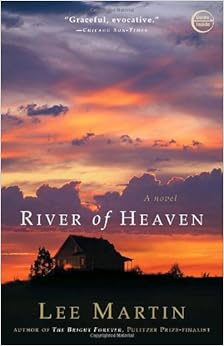
by Lee Martin

Sam Brady leads a quiet, private life with his dog, Stump, until he decides to build a doghouse that looks like a ship. The doghouse attracts attention, which like the first domino, sets off a chain reaction. Sam's past begins to catch up to him. Martin presents Sam and his neighbor Arthur, his brother Cal, and other characters with vivid complexity. His storytelling reminds us that the small things matter. 

Lee Martin's quiet, observant, lyrical and surprising storytelling in this little novel has made him one of my new favorite authors. I will definitely be seeking out Martin's other titles in 2015.

The Remains of the Day
by Kazuo Ishiguro

This book has no right to be as fascinating, funny, beautiful, and compelling as it was. Nothing much happens--and yet by the time you get to the end, you feel like you've had a Literary Experience and you will never be the same.

I'm happy that Mr. Ishiguro has a new novel coming out in March, his first in ten years.


Extremely Loud and Incredibly Close
by Jonathan Safran Foer

Foer's groundbreaking literary style would normally not be my cup of tea. It's borderline stream-of-consciousness, and my undiagnosed ADD gives me enough trouble tracking the characters and settings in a traditional novel, let alone one that has multiple POVs. And yet this story sucked me in and pulled me along. Foer captures the voice of his young male protagonist perfectly; it's poignant and funny.

Man's Search for Meaning
by Viktor Frankl

"Everything can be taken from a man but one thing: the last of the human freedoms--to choose one's attitude in any given set of circumstances, to choose one's own way."

In telling the story of his time in the concentration camps during WWII, Viktor Frankl asserts that we have the power to find meaning, hope, and purpose in the middle of our inevitable suffering. This book is an enduring and accessible classic.

Cutting for Stone 
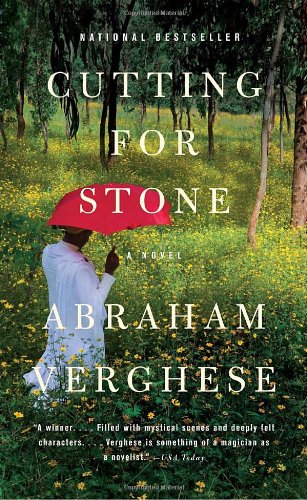
By Abraham Verghese

It says a lot about this book that John Irving (another of my favorite authors) reviewed Cutting on Amazon: "This is a first-person narration where the first-person voice appears to disappear, but never entirely; only in the beginning are we aware that the voice addressing us is speaking from the womb!" 

I'll be reading this one again.

The Hot Kid
By Elmore Leonard

I picked this up because I binge-watched all the seasons of Justified (based on an Elmore Leonard novella, Fire in the Hole) this year, and wow. Elmore Leonard's tight, packed sentences sucked me in from the first page, and I don't even know how he manages to write such vivid characters with so few words. I will definitely read more Elmore Leonard in 2015.

The Seven Storey Mountain
by Thomas Merton

Started this one a couple of years ago; put it down for a long time; and finally picked it up and read it all the way through this year. There is nothing like a good conversion story to inspire your new year.

As the child of fundamentalist, Dispensationalist parents, I learned early on to mistrust any form of Christianity that was not exactly like my own. Catholics, to me, were not "real" Christians; in fact, most Christians were quotation-mark "Christians." I'm not proud of this. But as Kathleen Norris wrote in Amazing Grace (see below), “In order to have an adult faith, most of us have to outgrow and unlearn much of what we were taught about religion.” 

And Merton delivers a great pay-off, with great writing on philosophy and theology. He inspires me to love God more, and to examine my faith and practice more rigorously. 

Amazing Grace
by Kathleen Norris

This was a re-read from several years ago. I picked it up again as part of my preparation for a class I taught at church. It's definitely worth re-reading. In her writing, Kathleen Norris often calls upon the writings of the early church mothers and fathers to illuminate contemporary life and faith. No one else does this like she does; she's like the modern day Thomas Merton.

Harry Potter and the Sorcerer's Stone
Harry Potter and the Goblet of Fire
Harry Potter and the Prisoner of Azkaban
Harry Potter and the Goblet of Fire
by J.K. Rowling

I read the first four Harry Potters when I was on bedrest in the hospital, pregnant with M. Peevie. M. Peevie, you might recall, just turned fourteen, and when I told her I had not read the last three books, she was shocked and horrified. 

"Mom! You have to read them!" she ordered.

I told her I didn't really remember the first four, but she suggested I just re-read them. "It won't take you very long!" she predicted. She was right. They were great the second time around; and now I've started the fifth book, H. P. and the Order of the Phoenix.


To Be Near Unto God
by Abraham Kuyper

"...[w]hen clouds gather over your head, when adversity, loss and grief inflict wound upon wound in your heart, when the fig tree does not blossom, and the vine will yield not fruit, then with Habakkuk rejoice in God, because his blessed nearness is enjoyed more in sorrow than in gladness...". I am working on this. 


A Public Faith: How Followers of Christ Should Serve the Common Good, by Miroslav Volf: File this one under "Mostly Over My Head"--but still well worth the time and effort to consume it. 

Volf responded to Bonhoeffer's assertion that the church facing the Nazi regime was experiencing a passage through a foreign land, suggesting that outside of this context, "serious problems arise" from this perspective:

The fundamental theological problem with such an external view of Christian presence in the world is a mistaken understanding of the earthly habitats of Christian communities. It presupposes that the culture in which they live is a foreign country, pure and simple, a land bereft of God, rather than a world that God created and pronounced good.
...[I]t would contradict major Christian convictions to think that the world outside Christian communities is bereft of God's active presence. The God who gives "new birth" is ... also the creator and sustainer of the world with all its cultural diversity...Cultures are not foreign countries for the followers of Christ, but rather their own homelands...Christian communities should not seek to leave their home cultures and establish settlements outside or live as islands within them. Instead, they should remain in them and change them--subvert the power of the foreign force and seek to bring the culture into closer alignment with God and God's purposes.

This is all well and good, but I'm not sure what that looks like operationalized. And that is a whole other blog post.

Pastrix: The Cranky, Beautiful Faith of a Sinner and Saintby Nadia Bolz-Weber: See Merton, above.

This is our God. Not a distant judge, nor a sadist, but a God who weeps. A God who suffers, not only for us, but with us. Nowhere is the presence of God amidst suffering more salient than on the cross. Therefore, what can I do but confess that this is not a God who causes suffering. This is a God who bears suffering. I need to believe that God does not initiate suffering. God transforms it.

Driftless, by David Rhodes: Many beautiful sentences in this one.

Jacob lay on his back. The stars looked back at him from ten million years ago, their light just now arriving. He wondered if there were other places in the universe where the rules of the living did not require feeding on each other--where wonder could be discovered without horror and learning the truth did not entail losing one's faith.

The Complete Storiesby Flannery O'Connor: You could teach a class based solely on the metaphors and similes O'Connor uses to talk about the sun and sky:

The sun was a huge red ball like an elevated Host, drenched in blood and when it sank out of sight it left a line in the sky like a red clay road hanging over the trees.
The sun was like a furious white blister in the sky.
The cows were grazing on two pale green pastures across the road and behind them, fencing them in was a black wall of trees with a sharp sawtooth edge that held off the indifferent sky.
The sky was bone-white and the slick highway stretched before them like a piece of the earth's exposed nerve.

OK, this post is already too long, so here are some honorary mentions from my 2014 reading list, with tiny reviews and/or quotations.

Faith Unraveled: How a Girl Who Knew All the Answers Learned to Ask Questions
by Rachel Held Evans: Exactly.

Heart of Darknessby Joseph Conrad: "I don't like work--no man does--but I like what is in the work,--the chance to find yourself."

Jewel, by Brett Lott: Sprawling. Well-drawn characters.

A Clash of Kings: A Song of Ice and Fireby George R. R. Martin: Loving this series.

Lolitaby Vladimir Nabokov: Beautiful writing; disturbing story.

Divergent, by Veronica Roth: The four categories were such a smart story hook, but honestly, it reads a little like a YA harlequin romance, especially once the kissing starts. This SNL spoof The Group Hopper was hilarious.

I Always Knew I Would Make It (And Other Entrepreneurial Fallacies)by Kate Koziol. This author is smart, funny, brave, and resourceful. And good at puzzling.

The Writing Lifeby Annie Dillard: Finally making my way through the best books on writing. This is a classic.

Whose Bodyby Dorothy Sayers: Can't believe it took me this long to read Sayers.

When You are Engulfed in Flamesby David Sedaris: Funny. Duh.

Bleak House, by Charles Dickens: Bleak, long. Very Dickensian, if you know what I mean.


That's it. What are you recommending from your 2014 reads?

Tuesday, May 13, 2014

Hashtag FFWgr, Part Two: The Reading List

In case you missed part one, you can read it here.

I promised to put together a reading list based upon the books and authors I heard cited at the Festival of Faith and Writing 2014. I've organized the list list into four categories: books about writing, works of fiction, books about faith, other non-fiction, and poetry and poets.  The list that follows is only partially annotated because there were SERIOUSLY a LOT of books and authors mentioned. I got tired of annotating and linking. Sorry.

Books about writing

Janet Burroway, Writing Fiction
--This is a college textbook. Interestingly, Amazon only offers an option to rent the book for a semester; it's not available for purchase new. You can buy a used copy on Amazon for $43.98, or on EBay for $52.89.

Kenneth Burke, Permanence and ChangeA Grammar of Motives.
--the latter work offers the dramatistic pentad, a model for analyzing narratives to understand human motivations and predict behavior. The five rhetorical elements include act, scene, agent, agency (or method or means), and purpose (or motive). 

A]ny complete statement about motives will offer some kind of answer to these five questions: what was done (act), when or where it was done (scene), who did it (agent), how he did it (agency), and why (purpose)." -Kenneth Burke

Annie Dillard*
--Mr. Peevie presciently gave me The Writing Life for Christmas, so I will be starting there.

Sol Stein, On Writing
Just reading the description of On Writing from Stein's own website makes me want to drop everything and read it, and while I'm reading it, start revising my novel-in-progress.

Works of fiction

Margaret Atwood, The Edible Woman
--I think I need to read more Margaret Atwood.

Raymond Carver*, Cathedral Stories,*, especially the short story A Small Good Thing; What We Talk About When We Talk About Love
--Carver's name was invoked at least three times during FFW.

Joseph Conrad, Heart of Darkness
--I'm embarrassed that I have not read this yet, and I just downloaded it to my Kindle for zero dollars and zero cents.

Cormac McCarthy, Blood Meridian
--If it took Harold Bloom three times to make it all the way through Blood Meridian, I don't hold much hope for my own ability to do so any time in the next century. But it's on the list anyway, because Bloom says McCarthy "has attained genius with that book."

Flannery O'Connor*, the short stories Good Country People and Revelation
--I have the complete short stories downloaded to my Kindle and ready for my summer beach reading; and I just read Good Country People for free here. Read Revelation for free here.

William Faulkner, Barn Burning, A Rose for Emily
Read Barn Burning for free here. Read A Rose for Emily for free here.

Ernest Hemingway, The Short Happy Life of Frances Macomber

Khaleid Hosseini, The Mountains Echoed

Washington Irving, The Legend of Sleepy Hollow
--Here's a switch: instead of reading it, listen to it!

Barbara Kingsolver

Harper Lee, To Kill a Mockingbird

Guy de Maupassant, The Necklace
--You probably read this one in high school, but in case you want to refresh your memory, you can read it online here.

John Steinbeck, The Chrysanthemums

Joyce Carol Oates, Where Are You Going, Where Have You Been?

Leo Tolstoy, The Death of Ivan Ilych

Mark Twain

Anne Tyler, The Beginner's Goodbye


Books about faith

Walter Brueggemann
--There are 68 publications listed on his Wikipedia page; where is a beginner to begin? That's not a rhetorical question, Internet.

George Herbert


--You can (sort of) read The Temple, Sacred Poems and Private Ejaculations online--but you may need a stronger prescription in your glasses when you're done. It might be worth it. 


Julian of Norwich
--Read the complete Revelations of Divine Love online here, as well as excerpts from the Revelations.

Denys Turner, The Darkness of God: Negativity in Christian Mysticism
--From the Amazon book description: Turner "argues that the distinctiveness and contemporary relevance of medieval mysticism lies precisely in its rejection of 'mystical experience,' and locates the mystical firmly within the grasp of the ordinary and the everyday." A quick look tells me I'll need to read it with my dictionary at hand.


Karth Barth

Frederic Buechner

Andrew Krivak, A Long Retreat

C. S. Lewis*, The Screwtape Letters

Parker Palmer, A Hidden Wholeness: The Journey Toward an Undivided Life

Walker Percy*, The Second Coming

Eugene Peterson

Jan Richardson

Teresa of Avila


Other non-fiction

Henry David Thoreau
--I read Thoreau's essay The Last Days of John Brown because FFW speaker James McBride's new book, National Book Award Winner The Good Lord Bird tells John Brown's story from a brand-new perspective. I was delighted to see Thoreau refer to his neighbors as pachydermatous--which he used in reference to the thickness of their heads, not their skin. Awesome.

Mary Karr, Lit, The Liar's Club
--Stephen King wrote this about Mary Karr's writing: "I was stunned by Mary Karr's memoir, The Liar's Club. Not just by its ferocity, its beauty, and by her delightful grasp of the vernacular, but by its totality--she is a woman who remembers everything about her early years."

Verlyn Klinkenborg, The Rural Life
--Interesting. The Rural Life is a weekly column in the New York Times about life on a farm and boots getting stuck in mud and stuff. Some people think it's a little pretentious and condescending.

Michael Perry

Poetry and Poets

Maya Angelou

Elizabeth Barrett Browning

Mary Oliver

Ron Padgett, Center of Gravity 

Lucy Shaw, The Crime of Living Cautiously

...

So now we have a reading list for the next two years--until FFW 2016 gives us another one.

Which of these books and authors have you already read? Which are you going to look for the next time you head to Myopic? (Shout out to M. Peevie--that's her favorite bookstore.)

I'm starting with Flannery O'Connor.

Sunday, April 20, 2014

Hashtag FFWgr

Ninety-nine percent of you won't know what that title means--which is sort of the epitome of bad communication. Nonetheless, I'm starting there, because I ended there--at #FFWgr. 

#FFWgr, the Festival of Faith and Writing in Grand Rapids, Michigan, is a biannual conference of writers and readers of faith: about finding faith, leaving faith, and returning to faith; about the connection between faith and writing. I make my pilgrimage there to find inspiration and motivation. I'm completely positive (in the ironic sense of those words) that I will eventually be one of the speakers there, talking to the little people about getting up at four a.m. and sitting down in front of the computer and waiting for God to show up.

Actually--that was James McBride's line. My perspective will be more of a p.m. perspective, because mornings give me hives; and my topic will be Why I Keep Writing Even Though I've Never Been Published; And As A Matter of Fact, Why Would You Even Listen To Me?

I'm going to give you two kinds of #FFWgr candy: motivational and/or interesting quotes from some of the talks I went to; and a reading list. I kept notes as I listened, and wrote down the names of books and authors that the speakers mentioned. I may have missed a few, but I've still got a pretty good list.

So first, the quotes, in order of their appearance:

Daniel Taylor:

"Everyone should write their own apologetics--how do you tell this story of faith to yourself?" This is a riff, he said, on Milton's idea that everyone should write his own theology. I tried to confirm that Milton actually said or wrote something like this, but could not. Internet, could you do me a solid and let me know a) did Milton ever say/write anything like that and b) what's the source?

The topic of Taylor's talk was The Use of Story in Apologetics. He said, "stories defend faith by making it desirable, powerful, winsome. Stories don't just tell truth. Truth can be a sledgehammer. Stories can make faith not just reasonable and believable, but also attractive."

"Stories are convincing; they require us to change, and tell us how to do it."

"Stories don't prove anything, but stories prove everything that's important."

"Don't just tell anecdotes, tell stories. Anecdotes are reduced; they lack personal experience and emotion." I'd like to learn more about this distinction.

"Look for evidence of the divine in the mundane and even in the profane." 

John Suk talked about something called "perspective by incongruity," an idea of Kenneth Burke's which I didn't quite get but will add to my growing list of Things I Want to Know More About.

(Sigh. #FFWgr always leaves me with the existential exhaustion of realizing ever more clearly how much I don't know.)

From James McBride

"Most of what I do fails. Learn to fail. Fail--then forget it." I'm not sure I believe this. Maybe it's hyperbole? I would like to know, operationally, what that looks like.

"I wake up at 4 a.m. and just sit there waiting for God to come into the room." Many speakers at the conference mentioned the productivity of the early morning hours, which discourages me a tiny bit.

"Skepticism is good, but cynicism is a killer of dreams." Ooooh, this was good. (And by the way, how do you spell "ooo" that rhymes with "mood" rather than ooooh that rhymes with "road"? Because I was aiming for the oo in mood sound there, but it just didn't look right without the h.)

Shannon Huffman Polson

"Grief and loss are lonely, but they connect you to humanity." I think this is why suffering is such a useful tool for an artist, writer, musician. Dammit.

"I wanted to suffer, wanted the pain of grief--because it would keep me closer to those I had lost." This certainly resonated with me, even though I remember when I said it to a friend, she looked at me strangely. I saw other heads nodding--and I was glad to see that this counter-intuitive feeling of wanting to hold on to the pain of grief was not merely a glitch in my otherwise well-adjusted persona, but that it had universal resonance.

"If the grief ebbed, did it mean that the love and connection were not that great? There is a lot of guilt in grief." This, too; both the question and the statement.

Andrew Krivak:

"Take small acts--actions outside of the interior life of grief and loss--and write them into your story." This is actually a paraphrase, but I like the notion that small acts have great value. I think he was making a reference to the book Small Acts of Resistance: How Courage, Tenacity and Ingenuity Can Change the World. 
Peter Marty

Peter Marty (whose appearance reminded me of Dietrich Bonhoeffer):

"If you want to be a better writer, become a deeper person." I wish he had offered Seven Steps to Becoming a Deeper Person.
Dietrich Bonhoeffer

"We keep on outsourcing our brains--we know and remember less. We externalize our knowledge, our taste, our experience, and our faith. We reference and rely on the faith and experience of others. In Genesis, by chapter three they stop talking with God and start talking about God."

"Is it possible for some people to miss their lives in the way that they miss a plane?"

"Tell me what you love, and I can tell you what you believe." Oof.

"We identify our center through suffering." More on this, please.

Anne Lamott:

"Life and writing are very, very hard. I don't think we're here to figure things out."

"There is perfect healing, but people die anyway. Frankly, if I were God, I would have a completely different system."

"I think if there is a God, he probably looks a lot like Isaac Stern. Or Bette Midler."

"We were taught to stay one step ahead of the abyss. If the abyss opens up at your feet, go to Ikea. Get an area rug."

"It's OK to admit that you're crazy and damaged. All the better people are."

Hugh Cook offered practical advice about writing fiction:

"Your character must desperately want something; but something thwarts her. She must make specific, decisive actions."

"Use dialogue not for narration or description, but to show your characters."

"Reveal your character's age early on."

Brett Lott:

Start a story with what you know, and head into "what if"--what if this happened, or that?"

Suzanne Woods Fisher:

"Answer the call to write; keep the calling at the forefront of your vision all the time."

"Living for the opinions of others is seductive; don't do it. Remember who you are."

I have no quotes from James Vanden Bosch, but his presentation on corpus linguistics was one of my top three sessions. Who knew. I might even sign up for the eight-week MOOC in September.

Miroslav Volf:

"Atheists point to ways that religion and Christians have failed and malfunctioned."

"We must listen to the voices of our brothers and sisters from around the world to penetrate our own self-deception. We must listen to the wisdom of saints and critics."

"We are restless for God; we reach for the transcendent. The orientation of our selves to the Divine is the primary function of faith."

This next quote is from an audience member who might have been quoting someone else, but it struck me as worthy of inclusion: "Christianity has become so sentimental and shallow that we can't even produce good atheists anymore!" This was connected to the part of the interview in which Volf said something to the effect that he'd take Nietzsche over Dawkins any day.

"I don't bemoan the marginalization of the Christian faith. There are strengths in the margins. When Christians were in the center of power we were used, and the faith was abused. Like the band of twelve followers on the outskirts of Jerusalem, we can testify to the beauty of Jesus Christ from the margins."

Rachel Held Evans:

"Every challenge--the challenge of writer's block, distraction, discouragement, fear, lack of ideas--is solved by getting back to work. In writing, that work is paying attention, naming things, telling stories." 

"Remember that God is generous, and grace is scandalous. God has called us to this work. There is no scarcity principle at work in writing--there's plenty of work to do, plenty of stories to tell."

Now, I bet you can't wait until #FFWgr2016! I know I can't.

Stay tuned for Hashtag FFWgr, Part Two: Reading List.

Sunday, May 2, 2010

The Writing Life: Festival of Faith & Writing Recap

Two weeks out (or so) and I'm still processing the lessons learned at the Festival of Faith and Writing. Here are the highlights:

Michael Perry was humble, gentle, honest and funny as he described the church of his growing-up years, and his departure from his parents' fundamentalist faith. I cracked up when he said he learned to write by reading The Writers' Market chapters on "How to Write." I could have listened to him all day.

Scott Russell Sanders described essay writing as "a search for pattern and meaning." When he starts an essay, he said, he has an experience, or story, in mind, but not the meaning or purpose or point. These come out of the writing process, and are gradually uncovered or revealed as the essay develops.

I'm not sure I understand this. I might not be smart enough, or patient enough, or secure enough, to be that kind of writer, but I think it might be worth pursuing.

Then Wally Lamb took the stage. "We knew Wally Lamb was a pseudonym for a woman," the person who introduced him said, "because when we read She's Come Undone, we knew only a woman could have written it." Everyone in the audience nodded in understanding. "And then we read I Know This Much is True, and we knew he was also a twin," she continued. "And a schizophrenic."

Wally (can I call him Wally?) told us how a line of dialogue popped into his head when he was in the shower.  Out of that line of dialogue, he envisioned a character, and he started writing in order to find out who he was and what was going to happen to him.  Two years later, his first short story was published, and nine or ten years later, while still teaching high school, Wally Lamb published his first novel. 

Also? Parker Palmer is my new boyfriend. "I was born baffled," he says, and writing helps him sort of figure things out. "Writing is truth telling through questioning, through struggle," he said.  He discussed the analogies between faith and writing, and said, "God companions me as I navigate the dark places."  Everything that came out of his mouth was quotable, although I did not take notes and didn't write any of the quotes down.  Also, I fell asleep three times because JH kept me up talking the night before until three-fricking-a.m., and she kept having to nudge me awake.  I have not yet read anything he's written, but I think I might start with The Promise of Paradox.

Mary Karr was funny, honest and inspiring.  She reminded writers to do two things: Rewrite; and, unexpectedly, memorize poetry.  The woman has a memory like double-sided tape.  Everything sticks.  She recited poems easily, and she made me hear the difference between reading a poem from the page, and reciting it from the mind and the heart.

The Andras Visky play Backborn was strange, poetic, and completely non-linear.  It was virtually unfathomable to my Western mind, and yet I was strangely intrigued.  We discussed it at dinner, and the veils of cultural and intellectual ambiguity parted a tiny bit.

I talked to three editors about my incomplete book proposal.  One reluctantly stuffed it into her purse and said she'd read it.  Another referred me to an editor at a different publishing house.  And the third sat down with me like an editorial therapist, asking me questions about me, my background, and my proposal. 

And now I need to get to work, fleshing out the ideas of the proposal, and putting meat on the bones of the chapter-by-chapter outline.  The working title is Fight Nice: Restoring civility in public and private discourse, and the challenge is to make the topic of civility so engaging, so real and provocative and maybe even a bit humorous, that people will want to read it.

Wish me luck.

Wednesday, April 28, 2010

Poem in Your Pocket 2010

Sheesh! I almost forgot! Tomorrow is Poem in Your Pocket Day, brought to you by the Academy of American Poets. So quick! Choose a poem from this page or this website or this list, print it out, and put it in your pocket. Pull it out during the day and read it to yourself, or share it with a friend or colleague.

At the recent Festival of Faith and Writing in Grand Rapids, poet and memoirist Mary Karr said that writers must do two things, and one of them was memorize poetry. (The other was rewrite.) Yes, that's right: memorize poetry. I'm not a poetry-memorizer (yet), but I'm putting it out there as a good idea for everybody, not just writers.

Why memorize poems, or put one in your pocket? The NYTimes published an editorial last year that attempted to answer this very question -- but Jim Holt's answer is "because it's deeply pleasurable." Interesting, but is it persuasive?

Two more reasons why it's good to read and occasionally memorize poetry:

1. Memorizing, in general, exercises the brain, and improves your brain's ability to remember other shit. That's good, right? I'm going to try to find some research that supports that statement.

2. Memorizing poetry, in particular, embeds vocabulary, syntax, and rhythmic language patterns into the brain so that you have them available for your own speaking and writing. The Well-Trained Mind elaborates on this theme quite well.

3. Maybe this goes back to the NYTimes editorial, but I'm convinced that poetry is worth the extra effort it takes to read, ponder, and digest. Even if we don't "get it" when we read a poem, if we spend time with it, read again more slowly, and possibly memorize it, that poem will likely gradually reveal itself to us, like the sculpture reveals itself to the sculptor, like a fingerprint shows up with the dust and the microscope.

Anyway, here's the little poem I'm putting in my pocket tomorrow:

Hope is the thing with feathers, by Emily Dickinson

Hope is the thing with feathers
That perches in the soul
And sings the tune without the words
And never stops at all,

And sweetest in the gale is heard;
And sore must be the storm
That could abash the little bird
That kept so many warm.

I've heard it on the chillest land,
And on the strangest sea,
Yet, never, in extremity,
It asked a crumb of me.

I'd love to know what poem you're putting in your pocket tomorrow (or today, probably, since it's almost after midnight).

Sunday, April 4, 2010

Blogging the Festival of Faith and Writing:

Dateline: Chicago

Getting excited about the Festival. Arranging logistics: what time are we going to leave? Who will drive? Can we get there in time for the 1:45 interview with Wally Lamb on Thursday? Can we stay until Mary Karr gives the final plenary on Saturday night? (By the way: click on that link. It's an interview with Karr in Salon.com.)

No, no. We MUST stay until after Mary Karr's talk. To leave before Karr would be like going to the Oscars and leaving right before Tom Hanks announced Hurt Locker for Best Picture.

Here's what I'm slating on my dance card in between Lamb and Karr:

  • Possibly Michael Perry on "Life as a Bumbling Agnostic," or Matt Ruff confessing "An Interesting Moral Education; or How I Learned to Lie for a Living."
  • Another Wally Lamb event: "There But For the Grace of God: What My Writing Has Taught Me About Sin, Redemption, and the Complexity of the Crime-And-Punishment Equation."
  • The talk by the poet Christian Wiman sort of intrigues me, even though I am not a poet, and only barely a reader of poetry. His topic is "Hive of Nerves: On Modern Anxiety and Its Ancient Remedy." I loved his essay, Gazing Into the Abyss."
  • Maybe I'll check out Kate "The Tale of Despereaux" DiCamillo's talk on "Why Writers Write: Questions and Answers on the Craft of Writing."
  • And, fondly remembering my conversations with Andras Visky both in my own home and also in Romania (name dropper!), I am interested in seeing his new play, Backborn.

There's more, of course; so much more. But this is a good start.

The primary reason I love to attend the Festival of Faith and Writing--other than the fact that it is three days of NO KIDS! NO DISHES! SHOWERING ALONE AND WITHOUT INTERRUPTIONS!--is that it is inspiring to me as a writer.

So far, the first thing I've learned from the FFW this year: I'm too lazy to be a real writer. These writers are prolific, focused, dedicated, focused, hard-working, focused, and apparently un-distracted by Facebook, 24, and Angel DVDs. So far, in reading through the speaker biographies, I have not read about any writers who seem even a little bit like me. They're all very evolved, spiritual, and terribly, terribly focused on their Craft.

Maybe I can spin that to a publisher as some kind of advantage.

Thursday, January 29, 2009

Book Review: Deliver Us From Me-Ville

With admirable transparency and a readable conversational writing style, David Zimmerman examines our need for redemption in the recently published Deliver Us From Me-Ville. He takes on an entire culture of narcissism, born in the Garden and bred in every human interaction since.

Zimmerman argues that superbia (the Latin word for an inordinate sense of self-regard; pride; or self-satisfaction) is common and calamitous, a "besetting sin among all God's children, nipping at the church's heels throughout its history, and as such it must be met by the vigilance of the people of God to hold it at bay." Superbia "sounds like a place," so Zimmerman dubs it Me-Ville, and urges us to endure vulnerability and the pain of re-training in order to allow God to deliver us.

Occasionally, Zimmerman enjoys his own sense of humor a tiny bit too much, and the resulting literary quirks become a bit distracting. He opens, for example, with a story about his niece that includes the colloquialism "yo," and then he continues to "yo" us for the next several chapters.

Also, there are times when the book makes assumptions or generalizations about people that obviously ring true in the author's life and personality--and often in my own, as well--but which do not necessarily hold true for across humanity. For example, Zimmerman looks at Biblical history (the Tower of Babel) and contemporary culture (and I use the word "culture" loosely, since I'm referring to American Idol) to illustrate his point that "...becoming famous is the holy grail for people steeped in superbia." Everyone is steeped in superbia, but not everyone seeks or desires fame.

In general, however, Zimmerman illustrates our condition with an engaging combination of contemporary culture and spiritual classics. His theme is clear and straightforward: "The way out of Me-Ville is unavoidably through Jesus, who visits us, displaces, us, delivers us, and sets us within the bounds of his city, his community."

His transparency is disarming: "My greatest fear in making my writing public...[is] that an audience will read what I write and disregard it as insignificant."
This fierce desire to live a meaningful life, to produce something meaningful, or to be considered important or significant in the eyes of other people--this, not the desire for fame, is a universal human condition. It's why we start out in Me-Ville, and why we need Jesus.

Zimmerman dips into the writings of Dietrich Bonhoeffer, Thomas Merton, and Henri Nouwen, among others, to develop a modern perspective on ancient Biblical themes; he takes the words of those writers and thinkers and connects them to our contemporary dilemmas. I love this about Zimmerman's book, because in giving me a taste of great thinkers and writers of the faith, it reminds me to pick up the source materials myself for some challenging reading and deep thinking.

Each chapter includes a section called "Escape Routes," practical applications of the preceding theoretical, exegetical material. These sections include activities and questions designed to move the reader to a deeper and more personal connection with the teaching of the chapter. Zimmerman often includes scripts for what we can say to ourselves in order to get more "in the way" of Jesus, such as this:

Before you get together with a group of people, imagine it as a mission, and consecrate it with missional language such as Isaiah's cry, "Here I am, Lord, send me." Be careful not to set a missional agenda for the time together; just make the effort to consecrate the moment.

Deliver Us From Me-Ville is a solid, helpful text that has the capacity to reach you exactly where you are today, and bring you more deeply into God's kingdom here on earth.