Showing posts with label inspiring. Show all posts

Friday, December 26, 2014

E. Peevie's Not-To-Be Missed Book Recommendations from 2014.

Some of the books I read in 2014 were AMAZING. In case you're looking for ideas for what to read in 2015, here are the highlights, annotated:

One More Thing: Stories and Other Stories 
by B.J. Novak

You know B.J. Novak as that guy from The Office who always looks a little fatigued, but who also looks like he could be Hugh Grant's younger brother. But if you read this book of short and very short stories, you will think of him as That Guy Who Can Really Write and Who Also Happens to Be On A TV Show. Because these stories! They amaze.

Novak's stories start somewhere familiar and end up knocking you off your chair with their originality. They deliver unexpected humor and on-point parody; they are clever and poignant and smart. Here's a great interview with Novak about the book and other stuff, in case you're interested.

Gone Girl
by Gillian Flynn

This suspenseful novel has more twists than a bag of fusilli. If you're like me, you'll need to take a swig of Mylanta every few chapters; or maybe take a break from reading to have a pot of Darjeeling and remind yourself that--thank God--mostly you can avoid dealing with sociopaths except in fiction and the occasional outlying relative. (Unless you can't, of course, in which case: sympathies.)

Gone Girl combines Stephen King-esque suspense with an insidious unreliable narrator a la Zoe Heller's Notes on a Scandal. I couldn't put it down.


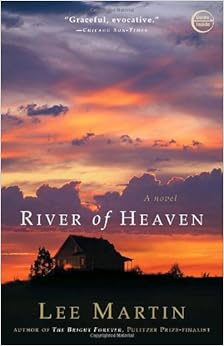
by Lee Martin

Sam Brady leads a quiet, private life with his dog, Stump, until he decides to build a doghouse that looks like a ship. The doghouse attracts attention, which like the first domino, sets off a chain reaction. Sam's past begins to catch up to him. Martin presents Sam and his neighbor Arthur, his brother Cal, and other characters with vivid complexity. His storytelling reminds us that the small things matter. 

Lee Martin's quiet, observant, lyrical and surprising storytelling in this little novel has made him one of my new favorite authors. I will definitely be seeking out Martin's other titles in 2015.

The Remains of the Day
by Kazuo Ishiguro

This book has no right to be as fascinating, funny, beautiful, and compelling as it was. Nothing much happens--and yet by the time you get to the end, you feel like you've had a Literary Experience and you will never be the same.

I'm happy that Mr. Ishiguro has a new novel coming out in March, his first in ten years.

Extremely Loud and Incredibly Close
by Jonathan Safran Foer

Foer's groundbreaking literary style would normally not be my cup of tea. It's borderline stream-of-consciousness, and my undiagnosed ADD gives me enough trouble tracking the characters and settings in a traditional novel, let alone one that has multiple POVs. And yet this story sucked me in and pulled me along. Foer captures the voice of his young male protagonist perfectly; it's poignant and funny.

Man's Search for Meaning
by Viktor Frankl

"Everything can be taken from a man but one thing: the last of the human freedoms--to choose one's attitude in any given set of circumstances, to choose one's own way."

In telling the story of his time in the concentration camps during WWII, Viktor Frankl asserts that we have the power to find meaning, hope, and purpose in the middle of our inevitable suffering. This book is an enduring and accessible classic.
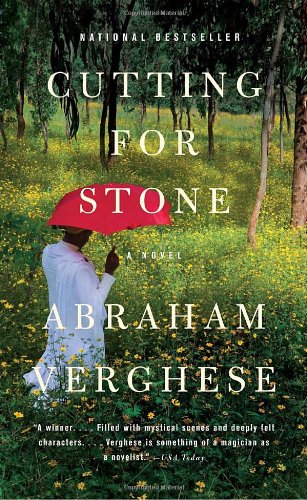
Cutting for Stone 
By Abraham Verghese

It says a lot about this book that John Irving (another of my favorite authors) reviewed Cutting on Amazon: "This is a first-person narration where the first-person voice appears to disappear, but never entirely; only in the beginning are we aware that the voice addressing us is speaking from the womb!" 

I'll be reading this one again.

The Hot Kid
By Elmore Leonard

I picked this up because I binge-watched all the seasons of Justified (based on an Elmore Leonard novella, Fire in the Hole) this year, and wow. Elmore Leonard's tight, packed sentences sucked me in from the first page, and I don't even know how he manages to write such vivid characters with so few words. I will definitely read more Elmore Leonard in 2015.

The Seven Storey Mountain
by Thomas Merton

Started this one a couple of years ago; put it down for a long time; and finally picked it up and read it all the way through this year. There is nothing like a good conversion story to inspire your new year.

As the child of fundamentalist, Dispensationalist parents, I learned early on to mistrust any form of Christianity that was not exactly like my own. Catholics, to me, were not "real" Christians; in fact, most Christians were quotation-mark "Christians." I'm not proud of this. But as Kathleen Norris wrote in Amazing Grace (see below), “In order to have an adult faith, most of us have to outgrow and unlearn much of what we were taught about religion.” 

And Merton delivers a great pay-off, with great writing on philosophy and theology. He inspires me to love God more, and to examine my faith and practice more rigorously. 

Amazing Grace
by Kathleen Norris

This was a re-read from several years ago. I picked it up again as part of my preparation for a class I taught at church. It's definitely worth re-reading. In her writing, Kathleen Norris often calls upon the writings of the early church mothers and fathers to illuminate contemporary life and faith. No one else does this like she does; she's like the modern day Thomas Merton.

Harry Potter and the Sorcerer's Stone
Harry Potter and the Goblet of Fire
Harry Potter and the Prisoner of Azkaban
Harry Potter and the Goblet of Fire
by J.K. Rowling

I read the first four Harry Potters when I was on bedrest in the hospital, pregnant with M. Peevie. M. Peevie, you might recall, just turned fourteen, and when I told her I had not read the last three books, she was shocked and horrified. 

"Mom! You have to read them!" she ordered.

I told her I didn't really remember the first four, but she suggested I just re-read them. "It won't take you very long!" she predicted. She was right. They were great the second time around; and now I've started the fifth book, H. P. and the Order of the Phoenix.


To Be Near Unto God
by Abraham Kuyper

"...[w]hen clouds gather over your head, when adversity, loss and grief inflict wound upon wound in your heart, when the fig tree does not blossom, and the vine will yield not fruit, then with Habakkuk rejoice in God, because his blessed nearness is enjoyed more in sorrow than in gladness...". I am working on this. 


A Public Faith: How Followers of Christ Should Serve the Common Good, by Miroslav Volf: File this one under "Mostly Over My Head"--but still well worth the time and effort to consume it. 

Volf responded to Bonhoeffer's assertion that the church facing the Nazi regime was experiencing a passage through a foreign land, suggesting that outside of this context, "serious problems arise" from this perspective:

The fundamental theological problem with such an external view of Christian presence in the world is a mistaken understanding of the earthly habitats of Christian communities. It presupposes that the culture in which they live is a foreign country, pure and simple, a land bereft of God, rather than a world that God created and pronounced good.
...[I]t would contradict major Christian convictions to think that the world outside Christian communities is bereft of God's active presence. The God who gives "new birth" is ... also the creator and sustainer of the world with all its cultural diversity...Cultures are not foreign countries for the followers of Christ, but rather their own homelands...Christian communities should not seek to leave their home cultures and establish settlements outside or live as islands within them. Instead, they should remain in them and change them--subvert the power of the foreign force and seek to bring the culture into closer alignment with God and God's purposes.

This is all well and good, but I'm not sure what that looks like operationalized. And that is a whole other blog post.

Pastrix: The Cranky, Beautiful Faith of a Sinner and Saint, by Nadia Bolz-Weber: See Merton, above.

This is our God. Not a distant judge, nor a sadist, but a God who weeps. A God who suffers, not only for us, but with us. Nowhere is the presence of God amidst suffering more salient than on the cross. Therefore, what can I do but confess that this is not a God who causes suffering. This is a God who bears suffering. I need to believe that God does not initiate suffering. God transforms it.

Driftless, by David Rhodes: Many beautiful sentences in this one.

Jacob lay on his back. The stars looked back at him from ten million years ago, their light just now arriving. He wondered if there were other places in the universe where the rules of the living did not require feeding on each other--where wonder could be discovered without horror and learning the truth did not entail losing one's faith.

The Complete Stories, by Flannery O'Connor: You could teach a class based solely on the metaphors and similes O'Connor uses to talk about the sun and sky:

The sun was a huge red ball like an elevated Host, drenched in blood and when it sank out of sight it left a line in the sky like a red clay road hanging over the trees.
The sun was like a furious white blister in the sky.
The cows were grazing on two pale green pastures across the road and behind them, fencing them in was a black wall of trees with a sharp sawtooth edge that held off the indifferent sky.
The sky was bone-white and the slick highway stretched before them like a piece of the earth's exposed nerve.

OK, this post is already too long, so here are some honorary mentions from my 2014 reading list, with tiny reviews and/or quotations.

Faith Unraveled: How a Girl Who Knew All the Answers Learned to Ask Questions
by Rachel Held Evans: Exactly.

Heart of Darkness, by Joseph Conrad: "I don't like work--no man does--but I like what is in the work,--the chance to find yourself."

Jewel, by Brett Lott: Sprawling. Well-drawn characters.

A Clash of Kings: A Song of Ice and Fire, by George R. R. Martin: Loving this series.

Lolita, by Vladimir Nabokov: Beautiful writing; disturbing story.

Divergent, by Veronica Roth: The four categories were such a smart story hook, but honestly, it reads a little like a YA harlequin romance, especially once the kissing starts. This SNL spoof The Group Hopper was hilarious.

I Always Knew I Would Make It (And Other Entrepreneurial Fallacies), by Kate Koziol. This author is smart, funny, brave, and resourceful. And good at puzzling.

The Writing Life, by Annie Dillard: Finally making my way through the best books on writing. This is a classic.

Whose Body, by Dorothy Sayers: Can't believe it took me this long to read Sayers.

When You are Engulfed in Flames, by David Sedaris: Funny. Duh.

Bleak House, by Charles Dickens: Bleak, long. Very Dickensian, if you know what I mean.


That's it. What are you recommending from your 2014 reads?

Sunday, April 20, 2014

Hashtag FFWgr

Ninety-nine percent of you won't know what that title means--which is sort of the epitome of bad communication. Nonetheless, I'm starting there, because I ended there--at #FFWgr. 

#FFWgr, the Festival of Faith and Writing in Grand Rapids, Michigan, is a biannual conference of writers and readers of faith: about finding faith, leaving faith, and returning to faith; about the connection between faith and writing. I make my pilgrimage there to find inspiration and motivation. I'm completely positive (in the ironic sense of those words) that I will eventually be one of the speakers there, talking to the little people about getting up at four a.m. and sitting down in front of the computer and waiting for God to show up.

Actually--that was James McBride's line. My perspective will be more of a p.m. perspective, because mornings give me hives; and my topic will be Why I Keep Writing Even Though I've Never Been Published; And As A Matter of Fact, Why Would You Even Listen To Me?

I'm going to give you two kinds of #FFWgr candy: motivational and/or interesting quotes from some of the talks I went to; and a reading list. I kept notes as I listened, and wrote down the names of books and authors that the speakers mentioned. I may have missed a few, but I've still got a pretty good list.

So first, the quotes, in order of their appearance:

Daniel Taylor:

"Everyone should write their own apologetics--how do you tell this story of faith to yourself?" This is a riff, he said, on Milton's idea that everyone should write his own theology. I tried to confirm that Milton actually said or wrote something like this, but could not. Internet, could you do me a solid and let me know a) did Milton ever say/write anything like that and b) what's the source?

The topic of Taylor's talk was The Use of Story in Apologetics. He said, "stories defend faith by making it desirable, powerful, winsome. Stories don't just tell truth. Truth can be a sledgehammer. Stories can make faith not just reasonable and believable, but also attractive."

"Stories are convincing; they require us to change, and tell us how to do it."

"Stories don't prove anything, but stories prove everything that's important."

"Don't just tell anecdotes, tell stories. Anecdotes are reduced; they lack personal experience and emotion." I'd like to learn more about this distinction.

"Look for evidence of the divine in the mundane and even in the profane." 

John Suk talked about something called "perspective by incongruity," an idea of Kenneth Burke's which I didn't quite get but will add to my growing list of Things I Want to Know More About.

(Sigh. #FFWgr always leaves me with the existential exhaustion of realizing ever more clearly how much I don't know.)

From James McBride: 

"Most of what I do fails. Learn to fail. Fail--then forget it." I'm not sure I believe this. Maybe it's hyperbole? I would like to know, operationally, what that looks like.

"I wake up at 4 a.m. and just sit there waiting for God to come into the room." Many speakers at the conference mentioned the productivity of the early morning hours, which discourages me a tiny bit.

"Skepticism is good, but cynicism is a killer of dreams." Ooooh, this was good. (And by the way, how do you spell "ooo" that rhymes with "mood" rather than ooooh that rhymes with "road"? Because I was aiming for the oo in mood sound there, but it just didn't look right without the h.)

Shannon Huffman Polson: 

"Grief and loss are lonely, but they connect you to humanity." I think this is why suffering is such a useful tool for an artist, writer, musician. Dammit.

"I wanted to suffer, wanted the pain of grief--because it would keep me closer to those I had lost." This certainly resonated with me, even though I remember when I said it to a friend, she looked at me strangely. I saw other heads nodding--and I was glad to see that this counter-intuitive feeling of wanting to hold on to the pain of grief was not merely a glitch in my otherwise well-adjusted persona, but that it had universal resonance.

"If the grief ebbed, did it mean that the love and connection were not that great? There is a lot of guilt in grief." This, too; both the question and the statement.

Andrew Krivak:

"Take small acts--actions outside of the interior life of grief and loss--and write them into your story." This is actually a paraphrase, but I like the notion that small acts have great value. I think he was making a reference to the book Small Acts of Resistance: How Courage, Tenacity and Ingenuity Can Change the World. 
Peter Marty

Peter Marty (whose appearance reminded me of Dietrich Bonhoeffer):

"If you want to be a better writer, become a deeper person." I wish he had offered Seven Steps to Becoming a Deeper Person.
Dietrich Bonhoeffer

"We keep on outsourcing our brains--we know and remember less. We externalize our knowledge, our taste, our experience, and our faith. We reference and rely on the faith and experience of others. In Genesis, by chapter three they stop talking with God and start talking about God."

"Is it possible for some people to miss their lives in the way that they miss a plane?"

"Tell me what you love, and I can tell you what you believe." Oof.

"We identify our center through suffering." More on this, please.

Anne Lamott:

"Life and writing are very, very hard. I don't think we're here to figure things out."

"There is perfect healing, but people die anyway. Frankly, if I were God, I would have a completely different system."

"I think if there is a God, he probably looks a lot like Isaac Stern. Or Bette Midler."

"We were taught to stay one step ahead of the abyss. If the abyss opens up at your feet, go to Ikea. Get an area rug."

"It's OK to admit that you're crazy and damaged. All the better people are."

Hugh Cook offered practical advice about writing fiction:

"Your character must desperately want something; but something thwarts her. She must make specific, decisive actions."

"Use dialogue not for narration or description, but to show your characters."

"Reveal your character's age early on."

Brett Lott:

Start a story with what you know, and head into "what if"--what if this happened, or that?"

Suzanne Woods Fisher:

"Answer the call to write; keep the calling at the forefront of your vision all the time."

"Living for the opinions of others is seductive; don't do it. Remember who you are."

I have no quotes from James Vanden Bosch, but his presentation on corpus linguistics was one of my top three sessions. Who knew. I might even sign up for the eight-week MOOC in September.

Miroslav Volf:

"Atheists point to ways that religion and Christians have failed and malfunctioned."

"We must listen to the voices of our brothers and sisters from around the world to penetrate our own self-deception. We must listen to the wisdom of saints and critics."

"We are restless for God; we reach for the transcendent. The orientation of our selves to the Divine is the primary function of faith."

This next quote is from an audience member who might have been quoting someone else, but it struck me as worthy of inclusion: "Christianity has become so sentimental and shallow that we can't even produce good atheists anymore!" This was connected to the part of the interview in which Volf said something to the effect that he'd take Nietzsche over Dawkins any day.

"I don't bemoan the marginalization of the Christian faith. There are strengths in the margins. When Christians were in the center of power we were used, and the faith was abused. Like the band of twelve followers on the outskirts of Jerusalem, we can testify to the beauty of Jesus Christ from the margins."

Rachel Held Evans:

"Every challenge--the challenge of writer's block, distraction, discouragement, fear, lack of ideas--is solved by getting back to work. In writing, that work is paying attention, naming things, telling stories." 

"Remember that God is generous, and grace is scandalous. God has called us to this work. There is no scarcity principle at work in writing--there's plenty of work to do, plenty of stories to tell."

Now, I bet you can't wait until #FFWgr2016! I know I can't.

Stay tuned for Hashtag FFWgr, Part Two: Reading List.

Saturday, May 5, 2012

Their Loss

My last post, Drastic Measures, has generated a bit of controversy.

"You are making a big mistake," one friend offered.

"Don't leave your job! Don't isolate A. Peevie!" another friend worried. (She wasn't the only one who worried about socialization--it's the obligatory objection whenever the topic of homeschooling comes up.)

These comments do not offend me; I know they spring from love and concern. But they are also driven by ignorance--and I mean that in the dictionary sense of the word, and with no rancour.

We started thinking about high school for A. Peevie sometime during his sixth grade year. We knew that the Chicago Public School selective enrollment high schools were out of our reach, and we started researching other public and private high school options. We visited the Chicago Waldorf School, and I posted on my FB page that I couldn't imagine A. Peevie going anywhere else for high school.

And then, guess what? I was a little too honest about his struggles with anxiety and organizational skills, and they turned him down. Here's the letter I wrote asking them to reconsider:
I've been thinking about Waldorf's thumbs-down on accepting A.Peevie in the high school in the fall. I don't know if you have a waiting list or not, but if so, I'd like to ask the admissions committee to reconsider his application.

One of the things you mentioned is that you are looking for students who are self-motivated learners. This is exactly the reason we are looking for a non-traditional school for him. The traditional academic environment seems to crush his spirit and his enthusiasm for learning; but when he is on his own, he takes the initiative to learn many new things. For example, he was learning about Leif Erikson in school, and he was so interested in him, and in the time period and his background, that he started teaching himself to speak Norwegian.

One of his heroes is Albert Einstein. When he learned that Einstein loved geometry (when he was about 11 years old), he decided he wanted to learn it himself--so he went online, looked up related websites, and printed out 15 pages of beginning lessons. He worked through all 15 of those pages on his own because of his own interest and curiosity.

He showed you one of his unfinished games that he had started to create. He has created several different similar games, with characters that he has drawn himself; he made duplicate card packs that he distributed to friends and neighbors, and they have ongoing games and battles using his unique characters and scenarios.

Currently, he is writing an adventure story--on his own, and not for school--that is in the fantasy/adventure genre. It's already about 15 chapters long, with unique characters and names, imaginary settings, and dramatic conflict.

You also mentioned that he might need more help than what Waldorf can give him with regard to his organizational skills. But again, it seems to me that Waldorf has exactly the environment he needs, and the study skills class seems specifically designed for kids like A.Peevie. He also has two very involved and supportive parents who are determined to make sure that he learns what he needs to learn in that arena in order to be successful.

He has managed to keep his creativity and imagination alive in spite of (I'm sorry to say) the stultifying atmosphere of a school that is not equipped to handle kids that fall outside of the traditional academic mold. He struggles, but he perseveres. He has dealt with many difficult challenges in his life, and this has given him a great deal of empathy for other people who are struggling. He is a heroic, charming, beautiful soul who will someday change the world.

A.Peevie would be a great addition to your school, and I am confident that he would thrive in an atmosphere that values individuality and creativity. I hope you'll bring my letter to the attention of TPTB (the powers that be), and that they will reconsider.

I don't know how Waldorf turned him down after that inspiring (if I do say so myself) plea, but we got a two-line response saying, "No, we're not going to reconsider; good luck; try this other school." Bastards.

After I got over being angry, I felt like God was firmly closing that door so that we could move on; and we did.

Tuesday, May 11, 2010

Forgiving the Unforgivable: a Review of The Hiding Place

Provision Theater made me cry.  Twice.  Jerks.

The Hiding Place, a play based on the book by Corrie ten Boom, tells the true and compelling story of the ten Boom family and their costly work with the underground resistance to hide and protect Jews during the Nazi occupation of Holland during WWII.  My family and one other decided that there was no better way to celebrate Mothers' Day than by watching a play about Nazis and concentration camps.

We ignored the the warning on the company's website suggesting that the material might be too difficult for children under 10.  One of our under-tenners seemed to handle it just fine; but M. Peevie cowered in my arms with my hands over her eyes and ears for much of the play.  "Are there going to be real gunshots?" she asked, remembering the loud and scary moments from The Three Musketeers.

"No," I accidentally lied.  But there were.  And there was hitting and brutality and other mean stuff that when you see it on stage, with real people, can feel more scary and painful than when you see it on the big blue screen.

"If the Nazis had a report card for niceness, they would get all F's!" M. Peevie declared after the show.

But the story is, of course, ultimately redemptive.  The ten Booms risk everything to help Jewish families -- some friends, some strangers -- escape during the War -- and Corrie's father and sister Betsie paid the ultimate price.  "Hold everything in your hands lightly," Corrie said in her later writings, "otherwise it hurts when God pries your fingers open."

I cried twice during the show: first, when Betsie died in Ravensbruck, and again when Corrie forgave the Dutch informant who facilitated her family's arrest. She wrote this about this forgiveness

Even as the angry vengeful thoughts boiled through me, I saw the sin of them. Jesus Christ had died for this man; was I going to ask for more? Lord Jesus, I prayed, forgive me and help me to forgive him....Jesus, I cannot forgive him. Give me your forgiveness....And so I discovered that it is not on our forgiveness any more than on our goodness that the world's healing hinges, but on His. When He tells us to love our enemies, He gives along with the command, the love itself.

Adapted and directed by Tim Gregory, the play is sometimes hard to watch because of the subject matter, but definitely worth it.  Lia Mortenson as Corrie strikes believable notes as a believer who sometimes doubts and often struggles to understand God's purposes and the teachings of her faith.  It's a big cast, and the other actors do a great job as well--except for the allegedly German-accented English was distracting and mixed up with some Russian and Eastern European accents. 

The Hiding Place is playing at Provision Theater through May 23.

Sunday, April 4, 2010

Blogging the Festival of Faith and Writing:

Dateline: Chicago

Getting excited about the Festival. Arranging logistics: what time are we going to leave? Who will drive? Can we get there in time for the 1:45 interview with Wally Lamb on Thursday? Can we stay until Mary Karr gives the final plenary on Saturday night? (By the way: click on that link. It's an interview with Karr in Salon.com.)

No, no. We MUST stay until after Mary Karr's talk. To leave before Karr would be like going to the Oscars and leaving right before Tom Hanks announced Hurt Locker for Best Picture.

Here's what I'm slating on my dance card in between Lamb and Karr:

  • Possibly Michael Perry on "Life as a Bumbling Agnostic," or Matt Ruff confessing "An Interesting Moral Education; or How I Learned to Lie for a Living."
  • Another Wally Lamb event: "There But For the Grace of God: What My Writing Has Taught Me About Sin, Redemption, and the Complexity of the Crime-And-Punishment Equation."
  • The talk by the poet Christian Wiman sort of intrigues me, even though I am not a poet, and only barely a reader of poetry. His topic is "Hive of Nerves: On Modern Anxiety and Its Ancient Remedy." I loved his essay, Gazing Into the Abyss."
  • Maybe I'll check out Kate "The Tale of Despereaux" DiCamillo's talk on "Why Writers Write: Questions and Answers on the Craft of Writing."
  • And, fondly remembering my conversations with Andras Visky both in my own home and also in Romania (name dropper!), I am interested in seeing his new play, Backborn.

There's more, of course; so much more. But this is a good start.

The primary reason I love to attend the Festival of Faith and Writing--other than the fact that it is three days of NO KIDS! NO DISHES! SHOWERING ALONE AND WITHOUT INTERRUPTIONS!--is that it is inspiring to me as a writer.

So far, the first thing I've learned from the FFW this year: I'm too lazy to be a real writer. These writers are prolific, focused, dedicated, focused, hard-working, focused, and apparently un-distracted by Facebook, 24, and Angel DVDs. So far, in reading through the speaker biographies, I have not read about any writers who seem even a little bit like me. They're all very evolved, spiritual, and terribly, terribly focused on their Craft.

Maybe I can spin that to a publisher as some kind of advantage.

Thursday, March 4, 2010

Emotional Maturity

The other day I posted a hilarious (to me) true story about a conversation between C. Peevie and myself. Mr. Peevie mentioned it at dinner, and before long we were all laughing and joking about hair cancer.

"It's not funny!" C. Peevie. Long beat. "People are dying."*

*"People are dying" is what the drunk lady said to C. Peevie and his peeps when they were joking around on the El. It has become a Peevie household catchphrase.

"I can't believe you put that in your blog!" C. Peevie continued. "You are NOT going to heaven."

Later, C. Peevie and I were sitting on the couch. "I'm mad about your blog post," he said.

"Really?" I asked, cluelessly. "Why?"

"Because now everyone is going to think I'm really stupid," he said. "I was kidding when I said 'hair cancer.'"

"Sweetie," I said, "No one who knows you thinks you're dumb. And the other four people who read my blog don't matter."

"Well, I don't like it," he said. "It really made me mad." I looked at him. He was serious. I knew I had blown it.

"Honey," I said carefully, "I'm sorry. I invaded your privacy by writing about our conversation, and I'm sorry. I'll take the whole post down if you want, or I'll put in a disclaimer that says you were kidding about hair cancer. I'm really sorry." I believe that sincere apologies should include the words "I'm sorry" at least three times, plus offer a real fix.

He looked thoughtful for a moment, but didn't say anything. "C. Peevie," I said, "I'll make it right, and I won't do it again. Do you want me to take the post down? Or," I suggested, thinking win-win, "you could leave a comment."

He said he'd think about it, but that I didn't need to delete the post. I promised that I would do better at respecting his privacy from now on, and would only post about him with his permission. This might seriously curtail my blogging material, but it's worth it to remain on speaking terms with my teenager.

Meanwhile, how about the emotional maturity of that boy? Only 14 years old, and yet able to come to me, express his feelings when I have seriously offended him, and work toward reconciliation and mutually acceptable boundaries. I have known since he was very little that he is gifted with an emotional intelligence quotient greater than that of most adults, but this awareness and maturity still have the power to astonish me.

C. Peevie is my hero.

Saturday, January 23, 2010

Conan Takes the High Road

Nattering nabobs of negativity will say that Conan can afford to take the high road with $32 million in his pocket.

They'll say it's part of the deal he made. They'll say that he can spout bumper sticker philosophies like "don't be cynical" all he wants, but when you're in his shoes, you can afford to be gracious.

Hank Stuever in the Washington Post joked that Conan was aiming for Oprah's job when he urged fans to take the high road with him:

I hate cynicism -- it's my least favorite quality and it doesn't lead anywhere. Nobody in life gets exactly what they thought they were going to get. But if you work really hard and you're kind, amazing things will happen. I'm telling you, amazing things will happen.

But it doesn't matter that he walked away with a huge payday. He could have said anything he wanted. He could have ripped Leno. He could have criticized NBC. He could have been caustic and bitter.

But instead, he's grateful for what he's had, and grateful for the opportunities he has received.

I'm trying to figure out how to embed the video into this post; but for now, here's the link to Coco's gracious exit speech.

Tuesday, October 20, 2009

Bosses Don't Have to Suck, Part II

Read Part I here.

It took five jobs, seven bosses, and 18 years--but I finally landed a boss that knew how to lead, motivate, manage, and inspire. I would follow her to the ends of the earth, professionally. If you are a boss, and you are not sure if your direct reports would describe you this way (or you're pretty sure they wouldn't!), here's your chance to pick up some pointers.

In the four-plus years that I worked for DellaRella, I never felt anxious about unreasonable or unclear expectations; I never worried that I would be treated unfairly; I never felt the need to vent about the ridiculous antics or seditious attacks of a demented supervisor. Instead, I always knew and understood the expectations and timelines of my work tasks, and if I ran into trouble, I knew I could go to her and she would help me figure out a solution.

In our first telephone conversation, before we had met in person, DellaRella used some jargony-type language that instantly raised red flags; so I went into the interview wondering if this would be another in a long line of double-speaking Animal Farm-esque manipulators. (Yes, I am very quick on the draw with the Harsh and the Judgy. I'm working on it.) We worked out a contract arrangement, and I started working for her as a part-time independent contractor.

My initial doubts proved unfounded. Instead of finding myself in a position of linguistic and professional superiority, I discovered that rarest of breeds: a boss both knowledgeable and humble, both able to lead and willing to learn, having both personal warmth and professional boundaries. She was confident, but not arrogant. She was smart and experienced, but not a know-it-all.

I pinched myself often.

I did my best work while I was reporting to DellaRella, and here's why. She

  1. Had clear and reasonable expectations.
  2. Met with me often to check in on work in progress and adjust goals.
  3. Carefully and thoroughly planned the entire year, with input from her whole team.
  4. Allowed me to make mistakes, and worked with me to fix them.
  5. Encouraged me frequently.
  6. Gave me the support and resources I needed to get my work done. I didn't have to ask twice.
  7. Modeled a healthy work/personal life balance.
  8. Was reflective about her own strengths and weaknesses.
  9. Never spoke disrespectfully to me.
  10. Carried the burden of responsibility for a large office herself, but generously shared the credit for success with the team.

It wasn't just me who tightly bonded with DellaRella. Everyone who worked with her felt the same way--even when DR called them on the carpet.

"I can't be mad at her!" her assistant said to me once. "She's very tough on me--but she's right. I screwed up."

DellaRella has moved on to another life in another state--but if I got a call from her today asking me to work with her, I would not hesitate. And once I signed on to her project, I'd make sure that I exceeded her expectations--because a boss like that inspires you to not disappoint.

So here's my challenge to you bosses out there: Examine your boss-style honestly. Do you inspire DellaRella-esque loyalty among your team members?

It's something to aim for.

Sunday, March 8, 2009

Book Review: Joker One

Joker One by Donovan Campbell is a love story, a war story, a leadership guide, and a Marine recruitment narrative. It's a military memoir, and a little bit of a faith memoir. Joker One is an amazing true story, brilliantly told. I have never before read any memoir like it, and I urge you, when it comes out on March 10, to pick up a copy, read it, and pass it along.

I received my copy through the LibraryThing Early Reviewer (ER) program. In the past, I have had mixed luck with the ER selections I have snagged. This book made up for the duds.

Donovan Campbell completed the ten-week Marine Corp Officer Candidate School ("ten weeks of uninterrupted screaming") as a college junior, after which he swore that he would "never, ever join the Marine Corp." He graduated from Princeton and promptly joined the Corps, looking for "a pursuit that would force me to assume responsibility for something greater than myself, something that would force me to give back, to serve others." This earnestness struck me as a little too heavily played--but not for long.

Campbell's compelling story begins in the middle of a firefight, just after a rocket attack on an abandoned hotel that Campbell and his men were using as an observation position. Surrounded by rubble, choking dust, and pieces of exploded rockets, with a friendly machine gun firing full-bore a few feet away, Lieutenant Campbell calls in his position, burns his fingers on the still-searing-hot hockey puck of a warhead, and eventually discovered that the enemy had failed to kill or wound a single Marine.

That's just the first six pages.

Campbell's memoir covers the seven months that he spent with his company in Ramadi, Iraq, plus the four months of pre-deployment training at Camp Pendleton, California. He introduces fifteen men, the main characters in his deployment drama; and over the next 300 pages we learn to love and admire most of them as much as Campbell himself does.

Yes, most of them. Campbell uses real names in most cases, but two characters remain anonymous: Ox, the arrogant executive officer, with an astounding lack of self-awareness; and the inexperienced platoon sergeant who, "in theory...should be a lieutenant's right-hand man." Early on, Campbell described a field exercise which "highlighted the Ox's greatest strength--his unthinking, unhesitating aggressiveness--and his greatest weakness--his unthinking, unhesitating aggressiveness."

Campbell writes like a philosophical memoirist. As he tells the story of the baby-faced, inexperienced soldiers heading into what would turn out to be fierce and unrelenting guerilla-type combat, he takes time to examine the challenges of platoon leadership and his own evolution from a green, book-educated lieutenant with "zero real-world infantry experience" to a battle-experienced leader who had earned the love and respect of his men.

Before the Marines even boarded the plane for Iraq, Campbell describes a discipline dilemma which highlighted "the tension between justice and mercy, and, to some extent, between respect and love." As the officer responsible for a Marine facing discipline for the charge of under-age drinking, Campbell understood the need for consistency and accountability in the situation; but he also believed that

there are moments when simply following the letter of the law is a cop-out, and ultimately hinders your efforts to pull the best out of your men. ...the latter requires a love founded on humility, self-sacrifice, and in some cases, mercy.

Campbell wages an internal philosophical debate, asking himself, "What, then, should a young officer do to navigate the delicate tension between justice and fear, between mercy and love?" (Just the fact that Campbell even asked this question made me shake my head in wonderment. This to me displays a rare level of self-awareness, decency, and humility to which all of us should aspire.)

"The way to satisfy both justice and mercy," Campbell concluded,

is, quite simply, to take the hit for your men, to divert whatever punishment they may rate onto your own head if you believe that mercy is warranted...If you wear the bars on your shoulders, then it is your job to practice the greater love principle.

The "greater love" principle, if you're not familiar with it, is a reference to Jesus' words in the gospel of John: "Greater love has no man than this, that a man lay down his life for his friends." It's not the only time Campbell references a Biblical principal, and in fact, his narrative describes a faith journey almost as much as a military journey. "Deep in my heart," Campbell writes,

I believed that prayer would work without fail, that if together Joker One prayed long and hard enough, God would spare all of us...What I know now, and which didn't occur to me then, was that by praying as I prayed, and hoping what I hoped, and believeing what I believed, I was effectively reducing God to a result-dispensing genie who, if just fed the proper incantations, would give the sincere petitioner (me) the exact outcome desired.

There's plenty of shooting, swearing, exploding, bleeding, and sweating in Joker One--but it contains far more sensitivity, humility, and tenderness than you would expect in a book about soldiers and war. It's kind of a military memoir for girls, really--except that in the best of all possible worlds, these characteristics would be honored and admired in men as much as in women. This book must feel like a gift to the men of Joker One and to their families. It felt like a gift to me--and I'm grateful to Lieutenant Campbell for his service to our country, both as a soldier and as a rememberer.

Wednesday, November 5, 2008

The "Yes We Can" Moment

Last night, my family and I and our friend The Professor ate salsa-baked goat cheese with pine nuts and watched the election returns. Talk about reality TV!

From the comfort of the living room we felt the energy from the mobs standing shoulder-to-shoulder in Soldier Field and Grant Park. Part of me wished I was there, seeing the faces and living the excitement and optimism. But my motto is "don't stand when you can sit," and my other motto is "Have a glass of wine!", so I definitely made the right choice by staying home.

As the electoral votes inched steadily toward the magic number--270--the talking heads got more anecdotal and less objective. Warner Saunders recalled seeing young Emmett Till in his open casket, his 1955 murder catalyzing the civil rights movement which opened the doors for Barack Obama's presidential bid. By the end of the evening, Allison Rosati was wiping away tears. I think Mr. Peevie was stoic, but The Professor and I were both a little verklempt.

Chicago celebs were on hand to participate in the history-making, and we snorted and ridiculed the reporter who actually said to Oprah something outrageous like, "This wouldn't have happened without you." I can't find a story about this anywhere on the web, but that was some seriously ridiculous Oprah-worship. She pooh-poohed him, and changed the subject.

(It turns out that a social scientist dude interviewed on NightLine tonight attempted to quantify the Oprah Effect. Oprah's endorsement, he concluded, added 1.15 million votes to Obama's tally, giving him the advantage over Clinton in the early primaries. That's just one guy's math--but who knows? Maybe I jumped the gun with my snort.)

As Obama was making his acceptance speech behind the walls of bullet-proof glass, I'm sure I wasn't the only one wondering: Can they protect him?

The most mysterious images of the evening were the signs held in the crowd in New York City reading, "Cassoulet" and "Cassoulet forever." Why were they holding up signs for soup? Yahoo Answers has a few ideas, but none have floated to the top as the definitive explanation.

The unhappiest outcome of this election is the increasingly bitter division between right and left. Even though John McCain gave the most gracious and eloquent concession speech I have ever heard, I wonder whether his supporters will join him in
offering our next president our good will and earnest effort to find ways to come together to find the necessary compromises to bridge our differences and help restore our prosperity, defend our security in a dangerous world, and leave our children and grandchildren a stronger, better country than we inherited.

It's going to be hard for many of them. My dad, for example, a one-issue voter who suggested to me that if Obama became president, it would be God's judgment on our country for the abortion holocaust. And my friend who told me she is feeling impending doom. I'm sure she's not alone.

I feel the opposite of impending doom. The celebrations that spontaneously erupted across the nation last night, the fact that Obama very nearly claimed a landslide, the emotions and tears of so many Americans--I am totally swept up in it all. I feel hope and optimism.

I cannot imagine what it would feel like to experience this election from inside a darker skin, from the perspective of people who have never seen a president who looked like them; who never expected to see a person of color become president in their lifetimes. I love that McCain acknowledged this hugely historical accomplishment: "This is an historic election, and I recognize the special significance it has for African-Americans and for the special pride that must be theirs tonight."

I do feel hope and optimism; but at the same time, I'm a realist. Obama is a politician, and by definition, a politician is a deal-maker, a compromiser. He can't make everyone happy. He's also human, and I'm pretty sure he doesn't walk on water--so he's going to make mistakes.

But we can be caught up in the "Yes We Can" moment, for a little while at least, can't we?

Yes, we can.

Wednesday, June 11, 2008

Infidel

People. I have read a book that hits the mark in so many ways it makes me sweaty. You should go out and borrow it from the library or buy it from your favorite bookseller.

The book is Infidel, by Ayaan Hirsi Ali, a woman from a strict Muslim upbringing, with an unquenchable curiosity and a passion to bring justice to oppressed women and girls. Her story is both horrifying and inspiring, enlightening and provocative. It's the kind of memoir that makes you grateful for every little thing you have that you normally take for granted. Like genitals that aren't mutilated, for example, or the freedom to go in and out of your house whenever you want.

Born in Somalia, into a culture that values honor above all, Ali learned early on to protect and defend her family's honor by utter submission within the clan, and retaliation outside of it. When her grandmother called her stupid, and hit her, she was not permitted to talk back; but when a schoolmate struck her in the face, Ali's older cousin, supported by her family, ridiculed her for not retaliating, and forced her to fight until both girls were bloody.

Ali recalls that by the time she was ten, she had lived through three different political systems,

all of them failures. The police state in Mogadishu rationed people into hunger and
bombed them into obedience. Islamic law in Saudi Arabia treated half
its citizens like animals, with no rights or recourse, disposing of women
without regard. And the old Somali rule of the clan, which saved you
when you needed refuge, so easily broke down into suspicion, conspiracy and
revenge.

Also during those early years, she endured the excruciating horror of genital excision, sometimes called female circumcision, which involved a home surgery so horrific that I can't describe it in a PG-rated blog. On the same day, her brother and sister underwent the "necessary and proper dignity of purification" as well, on a table in the bedroom. Ali remembers her brother's silent tears and her sister's screams as the itinerant circumciser wielded his scissors. She was five years old, her sister four, her brother six.

Besides experiencing the ritual abuse and cultural disregard for girls, Ali also contended with a mostly absent father and a hardened, bitter mother who dispensed affection frugally but fierce punishment and criticism liberally. In spite of all of this suffering and disappointment, the tone of Ali's memoir is astonishingly affable, matter-of-fact, and even forgiving.

Ali escapes to Holland to avoid an arranged marriage--and this becomes a place of enormous change, growth, and challenge for her. Three years after successfully seeking asylum, Ali finds herself translating for other asylum seekers. She obtains a degree in political science, and eventually--you might think this sounds like a fairy tale, but it really happened--becomes a member of the Dutch Parliament.

The memoir not only traces the author's travels across countries, continents, political systems, and cultures, but it also narrates her journey from Islam to atheism. This aspect of Ali's compelling life story accentuated the strength of her character, her courage, and her bright, questioning intellect. The destination of atheism, by the time Ali arrives there, more than three-quarters of the way through her narrative, seems almost inevitable.

Is that strange for me to say? I'm a person of deep Christian faith, with no inclination to ditch it. I suspect that one of my favorite atheists, Christopher Hitchens (who wrote the forward to Infidel, and who has become friends with the author), would argue that Ali's gradual intellectual abandonment of her faith logically applies to any faith, to believe in God in any form and by any name.

But that's only true if all faiths are fundamentally the same. I'm one of Richard Dawkins' deluded believers: Jesus teaches a counter-intuitive gospel (love your enemies; take up your cross) that rejects the do-it-yourself salvation of other faiths. I don't feel threatened by Ali's conversion from Islam to atheism; in fact, I think her truth-telling is brave and inspiring. Hitchens' forward asserts that you can't read Infidel "and expect to be confirmed in the rightness of your 'own' religion as against the 'other' one," and that's true. But "not confirming" does not equate with disproving or discrediting.

I recommend Infidel to my vast Green Room audience, and I'd like to know what you think about it.

Monday, June 9, 2008

Eulogy

I got a call from a woman I didn't know, asking me to write a eulogy for her brother, whom I'd never met. I've never written a eulogy before, but I knew that I could do it. The bigger question was, what do you charge for a eulogy? How do you charge for a eulogy?

I interviewed the woman about her brother; let's call him Stephen. It turns out he was really a great guy, and in writing his eulogy, I got to know him. You should know him, too. Here's the eulogy his sister gave at his funeral:

I miss my brother Stephen. I’m sure you miss him, too. I think the world is going to miss him, because Stephen was the kind of person that the world needs more of: the kind of guy who didn’t think that love was a weakness or that faith made you a sissy. He knew that generosity made him richer, and making someone laugh was one more way to give a gift.

Stephen, as you know, was a big guy, and in many ways, a tough guy. He served as a sergeant in the Korean War, and led men into battle. Not only did he take his own turn on the front line, but more than once he went to the front line in place of a friend who couldn’t move for fear of the battle around him. It reminds me of a verse in the Gospel of John, John 15:13—“Greater love has no man than this, that a man lay down his life for his friends.”

Stephen was a tough guy, and a decorated soldier—but he wasn’t so tough that he couldn’t care deeply for his parents. He swore my cousins to secrecy when he was stationed right in the middle of a fierce fighting zone, because he knew mom and dad would lose sleep from worrying about him. When they found out, from a cousin who had missed the swearing-to-secrecy ritual, he reassured them as soon as he could that he’d be fine. And then he got wounded. Twice.

Stephen was married to his wife Annie for 54 years, and they had 10 beautiful children together. He instilled in his kids his own values of caring, giving, and respecting other people.

But even as he was being a father to his own kids, he was also sort of a father figure to my sister Kathy and me. When we’d have heavy hearts, we’d go to him, in private, and talk to him about our parents, or about whatever was bothering us. Stephen was a compassionate listener, and would always lift our spirits and help us feel better.


I admire how much Stephen loved and respected our parents. Even after he got married and started having children of his own, he’d still drive up to see them every two weeks. When Stephen was expected, the rest of us were chopped liver—“Stephen’s coming! We’ve got work to do. Let’s get cleaning! Let’s get cooking!” She’d cook—and all of us girls would help—all day Saturday and present a feast for Stephen and his family on Sunday. It was all about Stephen. Not that I ever resented him—I adored him, too.

And by the way, that was back when big families drove enormous station wagons, the kind with fake wood on the sides, and the kids all tumbling around in the back. It seemed like every time Stephen and Annie drove up, there’d be another little head popping up!

Later, after we grew up and moved away, he and Annie would come and visit us in Chicago. Kathy would introduce him to her friends and neighbors, and every one of them, without fail, would tell her later what a wonderful brother she had. Even Kathy's husband Andrew, who is as reticent as they come, always said he wished he had a brother like our brother Stephen. “He is going to be missed very much,” Andrew told me.


Stephen didn’t only care deeply about mom and dad. He loved every single one of his four brothers and five sisters, and none of us ever doubted it. He was the kind of guy who put family and friends ahead of most everything else. When his best friend Joe was getting married, Joe’s brother declined to be his best man because his fiance had the misfortune of not being Catholic. But Stephen stood by him, and stood up for him at the wedding.

Joe isn’t with us anymore either, but he told a story about how honest Stephen was. One time the two of them planned to skip school and go fishing. Joe wrote a note to tell the school that he was sick at home—and he forged his father’s signature. Stephen didn’t write a note, though, and the truant officer came to our house and busted them. What did Stephen say, what kind of an excuse did he make for not being in school? “We were going to go fishing,” he said. He couldn’t even tell a tall tale to the truant officer to get himself out of trouble.

There were thousands of stories—too many to count—that Stephen himself would tell about his youthful outdoor adventures. One time he led Joe and the other kids out to the woods. They were camping and being regular Daniel Boones, living off the land. It didn’t end well, though: Stephen and Joe had brought some bacon with them, cooked it over the campfire, and served it to their young woodsmen friends. I don’t know how you can cook bacon wrong—it’s already preserved, right?—but they all ended up getting violently ill.

Recently, Stephen’s friends and brothers and sisters have been coming from all over to support him, to try and help him heal just by being near him. “Why’d you come so far?” he said to us. “There was no need for that.”

But when our sister Corrie needed surgery, he had climbed in his beat-up hunting truck and drove non-stop across the country to California in order to be with her. You see, he had very high expectations for himself when it came to caring for other people—but he had very low expectations for what other people should do for him. He never gave a seminar on love, or wrote an article on friendship—but this is the way he lived, and as it turns out his life was an eloquent testimony about what love looks like.

I talked to our cousin Jack Bauer in Sydney, Australia last night. This is what he said about Stephen: “He was a true Bauer man, like the Last of the Mohicans: a tall man, a wide man, strong and honest, a man of principle and integrity, of heart and hard work.”

Stephen never complained—at least, not that I ever heard. He worked hard to provide for his family, because ten kids don’t feed themselves. He frequently worked double shifts as a tradesman in the tool and die business—but he never complained about hard work. Stephen would say that he worked himself fortunate.

Instead of complaining, he liked to tell stories and to make people laugh. When Stephen came into a room, you knew that you were about to hear a great story about a 10-point buck or a ridiculously stubborn Northern Pike.

He never lost this ability to make people laugh, even when he knew he was not going to get better. His family stayed close, and did what they could to keep him comfortable—but Stephen, who never missed an opportunity to make a joke, said, “You know what’s worse than dying? Having 10 women hovering around me, asking me can I get you this or can I get you that.”

The author and columnist Anna Quindlen published an essay in the New York Times almost exactly 14 years ago in which she said that her great journalistic contribution to her family is that she writes obituaries. She ponders death, and grief, and loss:


The landscapes of all our lives become as full of craters as the surface of the
moon…I write my obituaries carefully and think about how little the facts
suffice, not only to describe the dead, but to tell what they will mean to the
living all the rest of our lives. We are defined by who we have lost.

When someone we love dies, we grieve—but this is only the first part of our shared experience. This loss, Anna Quindlen says, is a “continuous presence of an absence.”

We have all been touched by Stephen’s excellent life. I think, now that we are sharing the experience of his loss, of the continuous presence of his absence, we should honor Stephen’s memory by being more like him: Complaining less, and laughing more. Giving more than we get. Choosing to do the loving thing, without expecting a payback. Allowing our faith to shape us into better, kinder people.

I’m going to close this with a verse that I think Stephen might have chosen as his final message to us, also from the Gospel of John, chapter 14, verse 27: “Peace I leave with you; my peace I give to you; not as the world gives do I give to you. Let not your hearts be troubled, neither let them be afraid.”


We’re going to miss you, Stephen.

In the end, I charged my client a hundred bucks. I remembered that when we dealt with Tohle Funeral Home to have our tiny Caitlin cremated, the funeral director was so kind: he didn't charge us for his time, but only for the costs he incurred. I wanted to offer the same kindness to my client.

It turns out that writing a eulogy is, essentially, story-telling--just like a lot of other rhetorical forms. But I don't really want to add eulogies to my repertoire. It would be a little like ambulance chasing.

But for this once, it was actually an enjoyable assignment. The only downside was that somebody had to die for me to get it.

Tuesday, February 5, 2008

Yes We Can

I loved this video. You can say it's all fluff and no actual stuff, no meat, no substance.

But words are powerful, and emotions are powerful, and this little video is powerful. It uses only the words of Barack Obama in his New Hampshire speech.

I dare you to watch it and not be moved--even if you're not voting for him, or don't like his stance on abortion, or whatever.

I get goosebumps every time.

Wednesday, September 5, 2007

One Little Walk

Is there anything that engenders more optimism than the first hour of a diet or exercise program?

Yesterday I had my whole house and my whole day to myself. No kids, no work projects, no scheduled dates with friends, no urgent errands. It was like a mini-vacation. And I said to myself, "Self, here's your opportunity to start on a road to a healthier you."

So my long-ignored Reeboks and I went for a long, brisk walk on the Other Side of the Tracks. I tried to swing my arms because I read in Prevention Magazine that arm-swinging makes you walk faster and burn more calories--but I felt like a goofball, so I stopped.

All during my walk I planned how I was going to work my hiney off after I got home, doing things I usually assiduously avoid, like de-cluttering the office, washing dishes, and scrubbing spots out of carpet. And here's the totally insane part: I actually did it!

That one walk set the tone for the whole day yesterday, and even for today. This morning, I was positive that my capri jeans fit a little more loosely. Instead of slipping into my comfortable but hideous faux-Crocs, I snapped along in my cute and strappy (but still comfortable) sandals. My body has the same sags, the identical bulges, the exact beauty flaws that it had yesterday--and yet today, I find myself standing straighter, and I feel fitter, prettier, healthier. What's up with that?

One little walk, and I'm a new me.

Caveat: Past performance is not a guarantee of future results. I'm just saying.

Monday, July 16, 2007

Heroes of Summer

There's a group of guys, and a few women, who willingly give up ten, 15, 20 hours a week--maybe more--every week for three or four months, to teach a bunch of kids about baseball. These guys in general, and my kids' little league coaches in particular, are the heroes of summer.

"Nice try!" they say, encouragingly, when the throw to first base hits the dirt in front of the second baseman, or beans a spectator.

"Keep your eye on the ball!" they repeat 10,000 times over the course of a season.

"Keep your head in the game!" they urge the boy who's hunched over in left field, watching an ant lugging a dead roly-poly across the dirt, and another boy who's making honeycomb designs with cleats in the short-stop dust.

They pack, unpack, load, and carry 30 pounds of bats, balls, bases, and equipment three times a week. They make 15 phone calls every time it rains to let parents know if the game's been cancelled. They create line-ups and game plans; they calculate batting averages and ERAs; they organize snack schedules.

They make time to play with and teach and put their arms on the shoulders of other people's children. Sometimes they make good players out of them. Sometimes they make not-so-great players feel like Honus Wagner. They give every kid a chance to shine in the field.

They stand behind your child and mine in the batter's box: they position his hands on the bat handle, tap his elbow up, and demonstrate how to step into the pitch. "Step into the pitch," they remind the batter. "Don't step out of the box." When my son swings wildly, like an ambitious lepidopterist, the coach hollers optimistically, "Good try, A. The next one's yours!" They give every kid a chance to shine at the plate.

(It's hilarious that some coaches can't compartmentalize as well as others, and their day job lingo creeps into their coaching. "You got a taste of it," said Coach Paul, a chef, to a batter who hit a foul ball. "That was an appetizer. Now go for the entree." The fans on the sidelines looked at each other and shrugged. "Yeah, eat it up!" I screamed, because, hey, it doesn't really matter what you holler for encouragement, just so long as you holler.)

They're heroes because they're patient, they're kind, they're engaged. They stand with the sun in their eyes and the sweat dripping down the back of their necks, persuading an anxiety-ridden nine-year-old who changed his mind about playing baseball and would rather be home sorting Pokemon cards to stick it out because his team needs him.

They're heroes because they gather the boys in the outfield after a grim 19 - 2 loss, and remind them of everything they did right. They're heroes because they shrug off a bad call, and the kids get an object lesson in frustration management and keeping things in perspective.

Coach Lou, Coach Bob, Coach Paul, Coach Ben, Coach Matt, Coach Neil, and any coaches I've forgotten -- thanks for being a hero this summer.